Quick answer
A loose adult tooth almost always signals advanced gum disease, grinding, or trauma that has damaged the bone and ligaments holding the tooth in place. The only path to strengthening it is to see a dentist promptly, identify the cause, and treat it: deep cleaning and periodontal therapy for gum disease, a night guard or bite adjustment for grinding, and splinting or repositioning for trauma. No supplement can tighten a loose tooth or reverse bone loss. Act early, because the more bone is lost, the harder it is to save the tooth.
- A loose adult tooth almost always means advanced gum disease, bruxism, or trauma, and needs prompt dental assessment
- Professional treatment is the only way to stabilize the tooth; home remedies and supplements cannot tighten it
- Oral probiotics may offer modest general gum-health support, but carry no evidence for reversing looseness
Short on time? Our pick
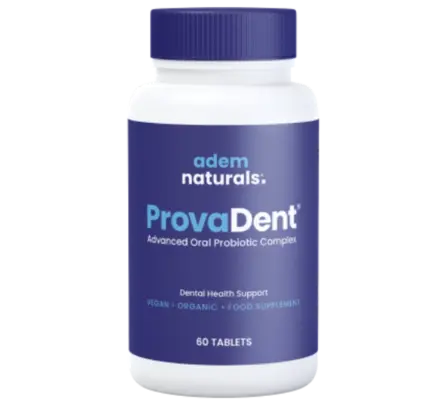
ProvaDent
Oral probiotic support
Our editorial score.Scored on formulation, refund policy, and value, not on a proven cure. No gum-disease supplement is clinically proven.
The oral-health supplement we'd try first, if we were going to try one.
- 60-day money-back guarantee, which covers the trial period if it does not help
- Sold through BuyGoods, which processes refunds reliably
- Aimed at the oral microbiome, the current focus of gum-health research
No supplement is proven to cure gum disease or regrow bone. We highlight ProvaDent for its formulation and guarantee, not as a cure.
A loose adult tooth is not something to wait out. The most common cause is advanced gum disease (periodontitis), which has already destroyed enough of the bone and connective tissue holding the tooth in place to make it move. The honest answer to “how to strengthen loose teeth” is: see a dentist promptly, identify the cause, and get that cause treated. Professional care is the only thing that can stop the damage and, in many cases, help a tooth stabilize. No supplement, rinse, or home technique can tighten a tooth that has lost structural support.
The short answer
A loose tooth in an adult almost always signals tissue or bone damage from gum disease, grinding, or trauma. The cause determines the treatment: deep cleaning and periodontal therapy for gum disease, a night guard or bite adjustment for grinding, and splinting or repositioning for trauma. The earlier you act, the better the odds the tooth can be saved. Supplements cannot reverse bone loss or substitute for that care, though some may offer modest general gum-health support alongside treatment.
Why adult teeth become loose: three main causes
Understanding the cause is the first step, because the right treatment is completely different for each one.
Advanced gum disease (periodontitis) is the most common cause of loose teeth and tooth loss among adults, and it often develops quietly over years. Plaque that is not removed hardens into tartar, which drives chronic bacterial infection beneath the gum line. The infection inflames the gum tissue and triggers the body’s immune response, which, over time, destroys the bone and ligaments that anchor teeth. According to the NIDCR, smoking is the most significant modifiable risk factor, and conditions like diabetes raise the risk further. By the time a tooth is visibly loose, the disease is at an advanced stage.
Bruxism (teeth grinding or clenching) puts repeated mechanical stress on teeth and their supporting structures. Over time this can cause tooth mobility even in people with otherwise healthy gums. The grinding is often worse during sleep and may be something the person is unaware of until their dentist notices wear patterns.
Dental trauma from a fall, sports injury, or impact can displace one or more teeth immediately. A knocked-out tooth is a dental emergency requiring care within the hour. A tooth that is loosened but still in the socket should be seen urgently, ideally the same day.
| Cause | Typical presentation | Core treatment |
|---|---|---|
| Advanced gum disease | Gradual loosening, bleeding gums, bad breath, gum recession | Deep cleaning (scaling and root planing), possibly surgery |
| Bruxism | Worn tooth surfaces, jaw pain, gradual mobility | Night guard, bite adjustment, possibly splinting |
| Dental trauma | Sudden loosening after impact | Repositioning, splinting, urgent dental assessment |
What professional treatment involves
For gum disease, the foundational treatment is scaling and root planing: a deep cleaning that removes plaque and tartar from below the gum line and smooths the root surfaces to help gum tissue reattach. The ADA states that “scaling and root planing without adjuncts is the treatment of choice for patients who have periodontitis,” and for moderate to advanced cases a dentist may also recommend adjunct antimicrobial therapy. Moderate to advanced cases often require a referral to a periodontist, a specialist in gum disease.
Once the active infection is controlled, some patients see their loose teeth stabilize as inflammation subsides and remaining bone support reasserts itself. The amount of bone remaining is the key variable: where it is too depleted, stabilization may not be possible. Surgical options, including osseous surgery, bone grafts, and gum grafts, exist for suitable candidates to address more advanced damage.
For grinding, a custom night guard removes the mechanical load from teeth during sleep. A dentist may also adjust the bite (occlusal adjustment) to redistribute force more evenly.
Tooth splinting involves bonding a loose tooth to its neighbors with dental bonding material or a thin wire, giving it stability while the underlying cause is being treated. It is used after trauma or in some periodontal cases as a maintenance measure, always alongside (not instead of) treating the infection or mechanical cause.
What home care can and cannot do
Good daily hygiene is not optional in any of this. Thorough brushing twice a day and flossing once a day removes the plaque that drives gum disease. The MouthHealthy gum disease page notes that at the early gingivitis stage “the disease can usually be eliminated by a professional cleaning at your dental office, followed by daily brushing and flossing.” That window closes as the disease advances, which is why early action matters.
What home care cannot do is replace what professional treatment addresses. You cannot floss away tartar that has hardened below the gum line. You cannot reverse bone loss by changing your brushing technique. And you cannot stabilize a loose tooth through any home remedy. A tooth that is moving is already past the point where hygiene alone can fix it.
The honest role of supplements
No supplement has been shown to tighten a loose tooth. That claim does not appear in any peer-reviewed evidence, and making it would be misleading. What some oral-health supplements, particularly those containing probiotic strains with adjunct periodontal evidence, can offer is modest general gum-health support alongside the professional care that does the real work. The evidence for probiotics as an adjunct is real but limited, and it applies to gum health broadly, not to reversing looseness specifically.
If you decide to try a supplement during your treatment, choose one with a genuine money-back guarantee so the trial is low-risk. That is the only consumer protection that matters when no independent clinical trial exists for any branded oral-health product.
Bottom line
A loose adult tooth needs a dentist, not a home fix. The cause is almost always advanced gum disease, grinding, or trauma, and the treatment has to match the cause: deep cleaning and periodontal care, a night guard or bite adjustment, or splinting and repositioning. Professional treatment can stop further damage, and in many cases help the tooth stabilize, but only if you act promptly. The longer you wait, the more bone is lost and the harder it is to save the tooth. Supplements can play a modest supporting role in general gum health alongside professional care, but they do not tighten teeth and do not substitute for seeing a periodontist or dentist.
Related notes
The bottom line
No supplement is proven to cure gum disease or regrow bone. We highlight ProvaDent for its formulation and guarantee, not as a cure. If you decide to try one, ProvaDent is the option we would pick, mainly because the 60-day money-back guarantee makes a trial risk-free.
Check Latest Price for ProvaDentFrequently asked questions
Can you really strengthen a loose adult tooth?
Sometimes, yes, but it depends on the cause and how much damage has already been done. If advanced gum disease is the cause, treating the infection through deep cleaning and professional care can stop further bone loss, and in mild to moderate cases the tooth may stabilize. If bone loss is severe, the tooth may not be saveable. The only way to know is a prompt dental exam. No supplement or home remedy can reverse bone loss or tighten a tooth that has lost its supporting structure.
What causes loose teeth in adults?
The most common cause by far is advanced gum disease (periodontitis), which destroys the bone and ligaments that hold teeth in place. Teeth grinding (bruxism) can loosen teeth over time through mechanical stress. Physical trauma to the mouth, such as a sports injury, can also displace one or more teeth. Rare causes include certain medications, bone conditions, and severe nutritional deficiencies, though these are far less common than periodontal disease.
Is it an emergency if my tooth is loose?
Yes, you should see a dentist promptly, ideally within a day or two. A loose tooth from gum disease is not the same urgency as a knocked-out tooth, which needs to be treated within an hour, but neither situation benefits from waiting. The longer bone loss or trauma goes unaddressed, the worse the prognosis. Call your dentist for an urgent appointment rather than waiting for your next scheduled visit.
Can a supplement tighten a loose tooth?
No. No supplement has been shown to tighten a tooth that has lost its bony support, and this is not a realistic expectation to set. What some oral-health supplements can do, with modest evidence, is support general gum health alongside professional care and good hygiene. The looseness itself is a structural problem that only professional treatment can address.
What is tooth splinting and does it help?
Splinting is when a dentist bonds two neighboring teeth together to give a loose tooth additional support. It is used after trauma or, in some cases, as part of periodontal maintenance to stabilize teeth that have some remaining bone support but need help while healing proceeds. It is not a treatment for the underlying gum disease, so it must always be combined with addressing the root cause.
Sources & references
Every claim above is drawn from these primary sources.
- ● Periodontal (Gum) Disease · NIDCR (National Institutes of Health)
- ● Gum Disease - Periodontal Disease · MouthHealthy (American Dental Association)
- ● Scaling and Root Planing · MouthHealthy (American Dental Association)
- ● Loose Tooth: When To Seek Treatment · Cleveland Clinic
- ● Periodontitis (Oral Health Topics) · American Dental Association
Free checklist
The 12 checks to run on a gum supplement label before you pay for it.
A one-page checklist drawn from ADA, Cochrane Oral Health and NIH/NIDCR guidance, plus the FTC's own rules on supplement advertising. It tells you which label claims mean something, which are decoration, and the wording that signals a product is not worth your money. We send it immediately, then one short note a week.
One click to unsubscribe. We never sell or share your address. Privacy.