Quick answer
For most people with a solid daily routine and no nutritional deficiency, dental supplements are a low-priority spend. The moves that actually move the needle are brushing twice daily, flossing, professional cleaning, and a low-sugar diet. Supplements make sense in two specific cases: correcting a verified deficiency (particularly vitamin D or calcium) or trying an oral probiotic as a modest adjunct. In either case, a 60-day money-back guarantee makes the trial risk-free. No dental supplement cures gum disease.
- Fix the routine first: brushing, flossing, and professional cleaning deliver far more benefit than any supplement
- Vitamin D and calcium have the strongest evidence, but only when correcting a real deficiency
- Oral probiotics have modest, maintenance-dependent evidence; no branded product has an independent trial
Short on time? Our pick
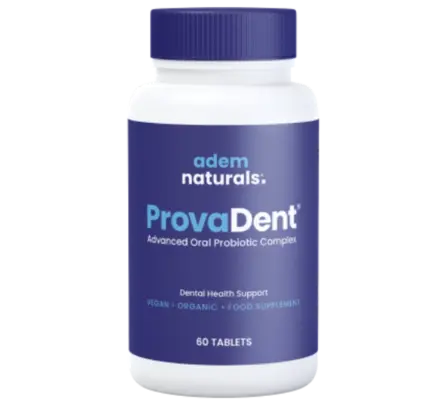
ProvaDent
Oral probiotic support
Our editorial score.Scored on formulation, refund policy, and value, not on a proven cure. No gum-disease supplement is clinically proven.
The oral-health supplement we'd try first, if we were going to try one.
- 60-day money-back guarantee, which covers the trial period if it does not help
- Sold through BuyGoods, which processes refunds reliably
- Aimed at the oral microbiome, the current focus of gum-health research
No supplement is proven to cure gum disease or regrow bone. We highlight ProvaDent for its formulation and guarantee, not as a cure.
Are dental supplements worth it? For most people with a solid daily routine and no nutritional deficiency, the honest answer is no, not as a priority spend. The moves that actually move the needle are brushing twice daily, flossing, professional cleaning, and reducing dietary sugar. Supplements occupy a distant second tier. That said, there are specific cases where a bounded trial can be worth the cost, and knowing which case you are in is what this guide is for.
The short answer
Dental supplements are worth it in a narrow set of circumstances: correcting a real deficiency (particularly vitamin D or calcium), or adding an oral probiotic as a modest adjunct on top of an already-solid hygiene routine. For everyone else, the evidence does not support spending money on supplements before the basics are locked in. No supplement cures gum disease, reverses bone loss, or replaces professional care.
What the evidence actually says about dental supplements
The supplement category is not monolithic. Ingredients vary enormously in how much evidence they carry.
Vitamin D and calcium have the strongest case among supplement ingredients for oral health. A systematic review on vitamin D and periodontal health found a linear association between vitamin D status and periodontal outcomes, though the authors note the evidence remains insufficient for firm conclusions. The mechanism is credible: vitamin D supports calcium absorption, bone metabolism, and immune regulation. Calcium makes up the mineral backbone of both teeth and alveolar bone. A survey of adults in periodontal maintenance programs found that most patients were not meeting recommended intakes through supplementation, and that dental professionals should counsel patients on adequate intake. The key word is “adequate.” If your dietary intake is already sufficient, adding more does not produce extra benefit.
Oral probiotics are the second category with real but modest evidence. A meta-analysis of oral probiotic studies found a small, statistically significant effect on gum bleeding and plaque when probiotics are added to professional cleaning, though clinical relevance was uncertain. The effect is small, the studies are mostly low-grade, and the improvement tends to revert after you stop. You can read the detailed breakdown in our dedicated page on oral probiotics for gum health.
Everything else (most herbal blends, whitening compounds, “remineralizing” capsules, and heavily marketed multi-ingredient formulas) has very weak evidence for the finished product. The ingredient research is either general, low-grade, or conducted in conditions very different from swallowing a capsule.
A framework for deciding
Before spending anything on supplements, run through this honest checklist.
| Question | If yes | If no |
|---|---|---|
| Is your routine solid? (Brush 2x, floss daily, professional cleaning on schedule) | Move to next question | Fix the routine first. Supplements will not fill this gap. |
| Do you have a verified deficiency (vitamin D, calcium)? | A supplement to correct the deficiency is likely worth it. | No deficiency means no deficiency-correction benefit. |
| Do you have active gum disease or significant bleeding? | Dental visit is the priority. An oral probiotic adjunct may add a small benefit on top of professional care. | Keep up the routine; supplements are low priority. |
| Does the product carry a real money-back guarantee? | A trial is low-risk. | Without a guarantee, the cost of a failed trial is entirely yours. |
The ADA notes that while nutritional status may influence immune response relevant to gum health, research shows insufficient evidence linking specific dietary factors to periodontal outcomes. The NIDCR is direct that gum disease treatment centers on controlling infection through professional care and consistent daily hygiene. Both are saying the same thing: supplements are not the engine.
When supplements are NOT worth it
Be skeptical of any dental supplement that claims to:
- Cure or reverse gum disease
- Regrow gum tissue or bone
- Whiten teeth through internal action
- Replace the need for brushing, flossing, or dental visits
- Produce results from a “secret blend” backed by testimonials rather than trials
No branded dental supplement has an independent clinical trial of the finished product. The probiotic strain research and the vitamin D bone-health research are the closest things to a scientific foundation in this category, and even those point to modest adjunct benefits, not cures. Multi-ingredient herbal products (sometimes described as 20-plus ingredient blends) generally have the weakest foundations of all. The other major consumer risk with some heavily marketed dental supplements is an ecosystem of clone and affiliate review sites that are difficult to distinguish from independent sources. Check whether the product is sold via a reputable channel and whether a genuine guarantee exists before ordering. See dental supplement scams: how to spot the red flags for a detailed breakdown.
When supplements ARE worth a try
Three scenarios where the math starts to make sense.
Scenario 1: You have a confirmed deficiency. If bloodwork shows low vitamin D, supplementing to bring your level into the normal range is standard medical advice and almost certainly benefits your whole-body health, including alveolar bone. This is not a “dental supplement” per se, it is a nutritional correction.
Scenario 2: You want an oral probiotic as a small adjunct. If your routine is already solid and you want to add a modest, evidence-informed layer on top, an oral probiotic is the category with the most actual trial data. The benefit is small and maintenance-dependent, but it is real. See are oral probiotics better than regular probiotics? for the comparison.
Scenario 3: The product carries a real guarantee. A 60-day money-back guarantee converts a low-evidence trial from a financial risk into a time risk. If you see no benefit, you get your money back. That changes the calculus. Without a guarantee, you are simply paying for hope.
Bottom line
Dental supplements are worth it in specific circumstances, and not worth it for everyone else. The hierarchy is clear: brushing, flossing, professional cleaning, and a low-sugar diet do the real work. Correcting a verified deficiency (especially vitamin D or calcium) makes sense as a health baseline. Oral probiotics can add a small adjunct benefit on top of a solid routine. Multi-ingredient herbal blends and heavily marketed “dental formulas” have the weakest evidence and the most consumer risk. If you do try a supplement, use one with a genuine money-back guarantee so the experiment has a defined exit.
Related notes
The bottom line
No supplement is proven to cure gum disease or regrow bone. We highlight ProvaDent for its formulation and guarantee, not as a cure. If you decide to try one, ProvaDent is the option we would pick, mainly because the 60-day money-back guarantee makes a trial risk-free.
Check Latest Price for ProvaDentFrequently asked questions
Are dental supplements worth buying?
For most people with a good daily routine and no nutritional deficiency, dental supplements are a low-priority spend. The highest-value moves are brushing twice daily, flossing, professional cleanings, and a low-sugar diet. Supplements can make sense in specific cases: correcting a verified deficiency (vitamin D, calcium) or trying an oral probiotic as a modest adjunct. In those cases, a 60-day money-back guarantee makes the trial risk-free.
Do dental supplements replace brushing and flossing?
No. No supplement replaces mechanical cleaning. Plaque is removed by brushing, flossing, and professional scaling. A supplement may add a small adjunct benefit on top of that foundation, but it cannot carry the load by itself. Any product that implies otherwise is overstating the evidence.
Which dental supplements have the most evidence?
Vitamin D and calcium have the strongest evidence for supporting the bone structure underlying teeth, particularly in people with verified deficiencies. Oral probiotics have modest, low-grade trial evidence for reducing gum bleeding as an adjunct to professional cleaning. Most other marketed ingredients (herbal blends, whitening compounds) have very weak or no credible trial evidence for finished products.
What is the safest way to try a dental supplement?
Buy only from brands that offer a real money-back guarantee (60 days is standard for reputable products), so you can get a refund if you see no benefit. Do not buy from third-party retailers where the guarantee may not apply. Treat it as a bounded experiment on top of your existing routine, not as a replacement for it.
Can dental supplements cure gum disease?
No. No supplement cures gum disease, reverses bone loss, or regrows gum tissue. Gum disease is managed through professional care and consistent daily hygiene. The NIDCR states clearly that the main goal of gum disease treatment is infection control, not supplementation. Supplements may support that process as a minor adjunct, but they are not a treatment.
Sources & references
Every claim above is drawn from these primary sources.
- ● Gum Disease (Periodontal Disease) · NIDCR (National Institutes of Health)
- ● Nutrition and Oral Health · American Dental Association
- ● Vitamin D and Periodontal Health: A Systematic Review · PMC (National Library of Medicine)
- ● Calcium and vitamin D use among adults in periodontal-disease maintenance programs · PMC (National Library of Medicine)
- ● Oral probiotics and periodontal parameters - meta-analysis · PMC (National Library of Medicine)
Free checklist
The 12 checks to run on a gum supplement label before you pay for it.
A one-page checklist drawn from ADA, Cochrane Oral Health and NIH/NIDCR guidance, plus the FTC's own rules on supplement advertising. It tells you which label claims mean something, which are decoration, and the wording that signals a product is not worth your money. We send it immediately, then one short note a week.
One click to unsubscribe. We never sell or share your address. Privacy.