Quick answer
No supplement reverses established gum disease or regrows the bone that periodontitis has destroyed. Gingivitis, the early reversible stage, can be resolved through plaque removal and professional cleaning, not through pills. Oral probiotics offer a small, short-term adjunct benefit when added to professional treatment, but they do not change the fact that gum disease is treated mechanically, not nutritionally.
- No supplement reverses periodontitis or regrows lost bone
- Gingivitis can be reversed by removing plaque, not by taking supplements
- Oral probiotics are a modest adjunct to professional care, not a treatment
Short on time? Our pick
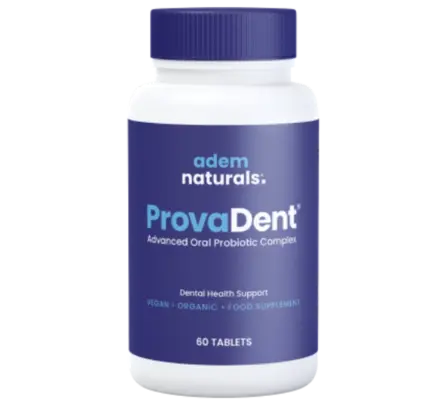
ProvaDent
Oral probiotic support
The oral-health supplement we'd try first, if we were going to try one.
- 60-day money-back guarantee, so a trial costs you nothing if it does not help
- Sold through BuyGoods, which processes refunds reliably
- Aimed at the oral microbiome, the current focus of gum-health research
No supplement is proven to cure gum disease or regrow bone. We highlight ProvaDent for its formulation and guarantee, not as a cure.
If you are asking whether supplements can reverse gum disease, the honest answer is no, not in the way the question usually means. No supplement reverses periodontitis or regrows the bone that gum disease has already destroyed. What supplements can do, at most, is act as a modest add-on to the professional treatment that actually does the work. That distinction is the whole story, so it is worth being precise about it.
The short answer
No pill, probiotic, or vitamin reverses established gum disease. Once periodontitis has caused bone loss around the teeth, that bone does not grow back because you took a supplement. Any product marketed as reversing periodontitis is making a claim that is physiologically false.
The narrower, true version is this: the earliest stage of gum disease, gingivitis, can often be reversed, but that happens through plaque removal, not through a supplement. And certain oral probiotics show a small, short-term benefit when added to professional care. The benefit is real but minor, and it does not change the bottom line. Supplements are studied as helpers alongside treatment, never as the treatment.
Why periodontitis cannot be reversed by a pill
Gum disease exists on a spectrum. Gingivitis is the early, reversible stage: the gums are inflamed and bleed, but no permanent damage has been done. If plaque is removed and kept off, gingivitis can resolve.
Periodontitis is the advanced stage. Here, the inflammation has spread below the gumline and started destroying the bone and connective tissue that anchor the teeth. The NIDCR overview of gum disease and the American Academy of Periodontology’s patient information describe this bone loss as the defining feature of periodontitis. Lost bone is structural damage. No supplement triggers the body to rebuild it, which is exactly why “reverse periodontitis” claims should be treated as a red flag.
The realistic goal with periodontitis is not reversal but control: halting the progression, managing the inflammation, and keeping the teeth as long as possible. That is achieved with professional treatment, not pills.
Where probiotics actually fit
Oral probiotics are the supplement with the most legitimate signal for gum health, so it is worth being accurate about how much that signal is worth. A meta-analysis of probiotics as an adjunct in periodontitis treatment found that adding probiotics to scaling and root planing produced small improvements in gum measurements, on the order of a fraction of a millimeter in pocket depth and a small gain in attachment over three months. These are real but modest numbers, and they were measured on top of professional treatment, not instead of it.
A broader analysis of oral probiotics and periodontal parameters found a significant but small reduction in plaque and in bleeding on probing, while pocket depth did not improve significantly. The authors describe the clinical relevance of these effects as uncertain. Importantly, the benefit tends to fade roughly four weeks after stopping the probiotic, which tells you it is managing symptoms at the margin rather than curing anything.
So probiotics earn a place as a modest adjunct. They are not a reversal, and they are not a replacement for the cleaning that does the heavy lifting.
What actually works, by stage
| Stage | Can it be reversed? | What actually treats it | Role of supplements |
|---|---|---|---|
| Gingivitis (early) | Often yes | Daily brushing and flossing, professional cleaning | Minor add-on at most |
| Periodontitis (advanced) | No, only controlled | Scaling and root planing, ongoing hygiene, dental maintenance | Modest adjunct, no reversal |
The pattern is consistent. The interventions that change the course of gum disease are mechanical and professional: removing the plaque and tartar that drive the inflammation, and keeping them off. The NHS guide to gum disease lays out the same hierarchy, with good oral hygiene and professional cleaning as the foundation and deeper procedures reserved for advanced cases.
What this means for your money and your gums
If a product promises to reverse your gum disease, regrow your bone, or replace your dental visits, that promise is not supported by the evidence, and on the question of regrowing lost bone it is simply not possible. A more honest way to think about supplements here is as a possible small bonus layered on top of the real work, worth considering only after the basics are in place.
The basics are not glamorous, but they are what the evidence backs: brush twice a day, floss daily, and see a dentist or hygienist for cleanings and, if you have periodontitis, for scaling and root planing. If you want to add a probiotic on top of that as a modest experiment, the reasonable way to do it is with a guarantee-backed product so the trial costs you nothing if it does not help.
Bottom line
Supplements cannot reverse gum disease. Periodontitis with bone loss can be controlled but not undone, and no pill regrows lost bone. Gingivitis can be reversed, but by removing plaque rather than by taking anything. Oral probiotics offer a small, short-term, add-on benefit alongside professional treatment, and that is the ceiling of what the evidence supports. For a fuller look at the probiotic evidence, see do oral probiotics work for gum health, and for how marketing inflates these claims, read about dental supplement scams.
Related notes
The bottom line
No supplement is proven to cure gum disease or regrow bone. We highlight ProvaDent for its formulation and guarantee, not as a cure. If you decide to try one, ProvaDent is the option we would pick, mainly because the 60-day money-back guarantee makes a trial risk-free.
Check Latest Price for ProvaDentFrequently asked questions
Can any supplement reverse gum disease?
No supplement reverses established gum disease or regrows bone that periodontitis has destroyed. That kind of bone loss is not undone by a pill, which makes any product claiming to reverse periodontitis physiologically false. The most a supplement has been shown to do is act as a modest add-on to professional treatment. Oral probiotics, for example, can slightly reduce plaque and gum bleeding when added to a professional cleaning, but the effect is small, short-term, and not a substitute for the dental treatment itself.
Can early gum disease (gingivitis) be reversed?
Gingivitis, the earliest and mildest stage, can often be reversed, but the credit goes to plaque removal, not to supplements. Consistent brushing, daily flossing, and a professional cleaning to remove tartar can resolve the inflammation and bleeding of gingivitis. Some studies suggest oral probiotics can modestly help reduce gum bleeding as an add-on, but the foundation of reversing gingivitis is hygiene and professional care. Once gum disease advances to periodontitis with bone loss, it can be controlled but not fully reversed.
Do probiotics help with gum disease?
There is a modest, emerging signal that certain oral probiotics, used alongside professional treatment, can produce small improvements in gum measurements. A meta-analysis found statistically significant but small reductions in plaque and bleeding when probiotics were added to standard care, while pocket depth did not improve significantly. The benefits are small, come from low-grade studies, and tend to revert about four weeks after stopping. Probiotics are studied as add-ons to scaling, never as replacements for it.
What actually treats gum disease?
The treatments with real evidence are professional and mechanical, not nutritional. For gingivitis, that means thorough daily brushing and flossing plus a professional cleaning. For periodontitis, it means scaling and root planing, a deep cleaning that removes plaque and tartar from below the gumline, sometimes followed by additional procedures, all maintained with good home hygiene and regular dental visits. Supplements may sit alongside this as a minor adjunct, but they do not replace the core treatment.
Sources & references
Every claim above is drawn from these primary sources.
- ● Probiotics as an adjunct in periodontitis treatment - meta-analysis · PubMed (NIH)
- ● Effect of oral probiotics on periodontal clinical parameters · PubMed Central (NIH)
- ● Gum disease (periodontal disease) · National Institute of Dental and Craniofacial Research
- ● Periodontal disease information for patients · American Academy of Periodontology
- ● Gum disease · NHS UK