Quick answer
Receding gums cannot grow back on their own, and no supplement reverses gum recession or regrows lost tissue. The only structural fix is a surgical gum graft. Supplements can work as modest adjuncts to professional care: vitamin C has the clearest evidence when correcting a genuine deficiency, reducing gum bleeding and inflammation, while oral probiotics show a small temporary benefit for bleeding and plaque when added to routine hygiene and professional cleaning.
- Lost gum tissue does not regenerate naturally; no supplement reverses recession
- Vitamin C has the strongest evidence, but mainly in people who are actually deficient
- Oral probiotics produce a small, temporary adjunct benefit that fades after stopping
Our top picks at a glance
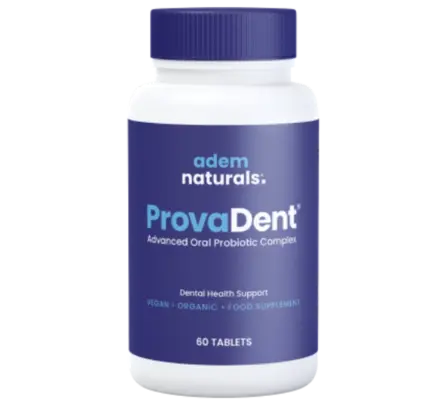 1
1 ProvaDent
The oral-health supplement we'd try first, if we were going to try one.
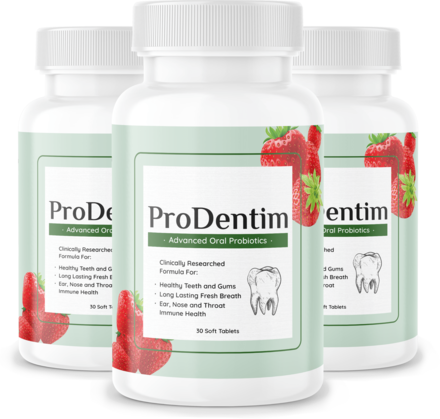 2
2 ProDentim
The best-known oral-probiotic chewable, and a reasonable second choice if you prefer a lozenge.
Rankings reflect formulation, value, and refund policy, not a proven cure. No supplement is proven to cure gum disease or regrow bone. Some links are affiliate links; we may earn a commission at no cost to you.
The most important thing to know about receding gums is also the most inconvenient: lost gum tissue does not grow back on its own. No supplement reverses recession, regenerates tissue, or closes an exposed root surface. That is the honest starting point. Once you accept it, the more useful question becomes: can supplements slow further progression and support overall gum health alongside professional care? The answer to that narrower question is a qualified yes, for a small number of nutrients, at modest effect sizes.
The short answer
Supplements for receding gums are adjuncts to professional dental care, not treatments for recession itself. Vitamin C has the strongest case when correcting a deficiency: low vitamin C correlates with worse periodontal disease, and correcting it can reduce gum bleeding and inflammation. Oral probiotics show a small, temporary benefit for gum bleeding and plaque when added to routine hygiene and professional cleaning. Nothing in either category reverses recession, regrowing tissue, or replaces a dentist visit.
Why receding gums are irreversible without surgery
Gum tissue is not like skin. When a cut on your arm heals, new cells fill the wound. Gum tissue that has pulled away from the tooth does not regenerate through that same process. The NIDCR notes that gum disease causes gums to pull away from the teeth, and the clinical consensus is that the tissue lost to recession stays lost unless a periodontist performs a gum graft: a surgical procedure that moves tissue from one part of the mouth to cover the exposed root.
This matters for supplements because it sets the ceiling on what they can do. The realistic goal for any supplement is to slow the rate of further tissue loss, reduce gum inflammation, or support the conditions that professional care needs to work. None of that is trivial, but none of it is recession reversal.
Vitamin C: the clearest evidence, with honest limits
Vitamin C is involved in collagen synthesis, which is why its deficiency (at the extreme, scurvy) produces classic gum symptoms: bleeding, swelling, and loosening teeth. More relevant to typical readers: lower blood vitamin C levels have been consistently associated with worse periodontal disease severity in the research literature.
A 2022 review published in Frontiers in Nutrition found that vitamin C depletion causes gingival bleeding independently of oral hygiene, and that correcting low vitamin C can reduce spontaneous bleeding and gum inflammation. A 2024 systematic review and meta-analysis in the International Journal of Molecular Sciences analyzing 16 studies and over 17,000 participants found that higher vitamin C intake was associated with reduced periodontal disease risk, though the variability between studies was high.
What both sources make clear: the benefit of vitamin C for gums is most pronounced when correcting a genuine deficiency. If your vitamin C intake is already adequate, topping up with megadose supplements probably provides little additional gum protection. The daily recommended intake for most adults is around 65 to 90 mg per day, achievable through diet. Supplementing is most warranted if your diet is poor in fruit and vegetables.
Crucially: vitamin C supplementation does not reverse recession or regrow tissue. The evidence is about reducing inflammation and bleeding in people who are low, not about undoing structural tissue loss.
Oral probiotics: modest adjunct, temporary effect
Oral probiotics have a more studied evidence base than most supplement categories in gum health, which is worth acknowledging honestly rather than dismissing or overselling.
A systematic review of L. reuteri probiotics in chronic periodontitis, indexed on PubMed, found that oral probiotics used alongside scaling and root planing provided modest additional reductions in pocket depth and bleeding versus cleaning alone. A broader meta-analysis of oral probiotics across gum health outcomes, published in PMC, found a small but statistically significant effect on plaque and bleeding on probing, with pocket depth effects smaller and less consistent.
The honest caveats are important:
- The studies are mostly short-term and small.
- The introduced bacteria do not permanently colonize the mouth, so the benefit tends to fade roughly four weeks after stopping.
- No study has specifically tested oral probiotics for gum recession as the primary outcome. The evidence is for gum bleeding and plaque reduction, not recession reversal.
- No finished branded oral probiotic product has its own independent clinical trial.
The practical conclusion: an oral probiotic may add a small, temporary improvement in gum inflammation and bleeding when used alongside good daily hygiene and professional care. It will not halt recession on its own.
What the evidence does not support
Several supplement categories are marketed for receding gums with little or no credible evidence behind them. This table summarizes honestly:
| Supplement | Evidence for gum health | Evidence for recession specifically |
|---|---|---|
| Vitamin C (correcting deficiency) | Modest; reduces bleeding and inflammation | None for recession reversal |
| Oral probiotics | Small adjunct effect on bleeding and plaque | None for recession reversal |
| Coenzyme Q10 | Very limited, low-quality studies | No independent evidence |
| Zinc | Some role in wound healing, minimal trial data | No evidence for recession |
| Vitamin D | Linked to bone health generally; low-quality gum evidence | No evidence for recession |
| Herbal blends (multi-ingredient capsules) | Ingredient evidence is weak; no finished-product trials | No evidence |
For the categories with no or very low evidence, we follow the evidence: if it is not there, we do not claim it.
How to think about supplements if your gums are receding
If your gums are receding visibly or a dentist has documented recession, the first conversation belongs in a dental office, not a supplement aisle. A periodontist can tell you whether gum grafting is appropriate, assess the underlying cause of recession (aggressive brushing, bite forces, untreated gum disease), and set up a maintenance plan.
Supplements can sit alongside that professional care as modest adjuncts. Vitamin C is cheap and worth correcting if your diet is poor. An oral probiotic backed by a money-back guarantee is a low-risk experiment with realistic expectations. Nothing in supplement form substitutes for the mechanical work of brushing correctly, flossing, and professional cleaning.
Bottom line
The best supplements for receding gums are the ones with realistic expectations attached. Vitamin C is worth addressing if your intake is low: the evidence for reducing gum inflammation in deficient individuals is reasonably consistent. Oral probiotics with good-strain research (such as L. reuteri) have modest, temporary adjunct evidence for gum bleeding and plaque reduction. Both work alongside professional care and daily hygiene, never instead of them. No supplement reverses gum recession, regrows lost tissue, or replaces a periodontist. If recession is progressing, the visit that matters most is the one with your dentist.
Related notes
The bottom line
No supplement is proven to cure gum disease or regrow bone. We highlight ProvaDent for its formulation and guarantee, not as a cure. If you decide to try one, ProvaDent is the option we would pick, mainly because the 60-day money-back guarantee makes a trial risk-free.
Check Latest Price for ProvaDentFrequently asked questions
Can supplements reverse receding gums or regrow lost gum tissue?
No. Lost gum tissue does not regenerate on its own, and no supplement reverses recession or regrows tissue. The only way to restore lost tissue is through a surgical procedure such as a gum graft performed by a periodontist. Supplements can support gum health as an adjunct to professional care, but they cannot undo tissue loss.
Which supplements have the most evidence for gum health?
Vitamin C has the clearest evidence, but mainly when correcting a deficiency. People with low vitamin C levels show worse periodontal disease, and correcting the deficiency can reduce gum bleeding and inflammation. Oral probiotics show a modest adjunct benefit for bleeding and plaque reduction when added to professional cleaning, but the effect is small and temporary. No other supplement category has strong evidence for receding gums specifically.
Do oral probiotics help with receding gums?
Oral probiotics have modest evidence as an adjunct to professional care for gum inflammation and bleeding, but no published trial has tested them specifically for recession. They may support gum health in a general sense but they do not reverse recession or regrow tissue. The benefit is temporary and tends to fade after stopping.
Is it worth trying a dental probiotic supplement for receding gums?
It can be a low-risk experiment if the product carries a genuine money-back guarantee, because that removes the financial risk. Set realistic expectations: a dental probiotic may modestly support gum health alongside good hygiene and professional care. It will not halt recession on its own, reverse tissue loss, or substitute for a dentist visit.
Sources & references
Every claim above is drawn from these primary sources.
- ● Gum Disease (Periodontal Disease) · NIDCR (National Institutes of Health)
- ● Beneficial Effects of Vitamin C in Maintaining Optimal Oral Health · PMC (Frontiers in Nutrition)
- ● Does Vitamin C Supplementation Provide a Protective Effect in Periodontal Health? A Systematic Review and Meta-Analysis · PMC (International Journal of Molecular Sciences)
- ● Clinical effects of Lactobacillus reuteri probiotic in chronic periodontitis - systematic review · PubMed (National Library of Medicine)
- ● Oral probiotics and periodontal parameters - meta-analysis · PMC (National Library of Medicine)
Free checklist
The 12 checks to run on a gum supplement label before you pay for it.
A one-page checklist drawn from ADA, Cochrane Oral Health and NIH/NIDCR guidance, plus the FTC's own rules on supplement advertising. It tells you which label claims mean something, which are decoration, and the wording that signals a product is not worth your money. We send it immediately, then one short note a week.
One click to unsubscribe. We never sell or share your address. Privacy.