Quick answer
You cannot grow back gum tissue that has already receded without a surgical graft. But you can stop or significantly slow further recession by removing its causes: switching to a soft-bristled brush with gentle technique, treating any active gum disease with professional scaling and cleaning, addressing teeth grinding with a night guard, and quitting smoking. Supplements are at most a minor adjunct on top of those steps.
- Lost gum tissue does not regenerate on its own; a graft is the only way to restore it
- The most common causes are aggressive brushing, active gum disease, grinding, and smoking; removing them stops progression
- Professional care is the core treatment for disease-driven recession, and no supplement replaces it
Short on time? Our pick
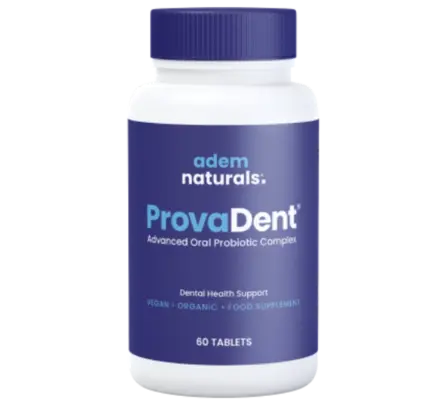
ProvaDent
Oral probiotic support
Our editorial score.Scored on formulation, refund policy, and value, not on a proven cure. No gum-disease supplement is clinically proven.
The oral-health supplement we'd try first, if we were going to try one.
- 60-day money-back guarantee, which covers the trial period if it does not help
- Sold through BuyGoods, which processes refunds reliably
- Aimed at the oral microbiome, the current focus of gum-health research
No supplement is proven to cure gum disease or regrow bone. We highlight ProvaDent for its formulation and guarantee, not as a cure.
You cannot grow back gum tissue that has already receded, at least not without a surgical graft. But you can often stop or significantly slow further recession once you identify and remove its causes. For most people, the causes are treatable: aggressive brushing, active gum disease, untreated teeth grinding, or smoking. Address those, and the recession frequently stops advancing. That is the honest answer, and it is worth more than any product pitch.
The short answer
Recession stops when you remove what is causing it. Lost tissue does not come back on its own. The practical goal is to halt progression by correcting brushing technique, treating any active gum disease, addressing grinding or bite problems, quitting smoking, and seeing a periodontist for professional care. Supplements are not what stops recession. Surgery (a gum graft) is the only way to restore tissue that is already gone.
Cause 1: Aggressive brushing (often the first thing to fix)
A surprising number of receding gum cases are partly or wholly caused by brushing too hard. Using a stiff-bristled brush with heavy pressure or a side-to-side scrubbing motion erodes both enamel and gum tissue over years. The damage looks like a V-shaped notch at the gum line, often worst on the side where a right-handed person scrubs most forcefully.
The ADA recommends a soft-bristled brush held at a 45-degree angle to the gums, with short, gentle back-and-forth strokes rather than vigorous scrubbing. That technique change alone is enough to stop brushing-induced recession from worsening in most people.
Practical steps:
- Switch to a soft or extra-soft bristled brush today.
- Hold the brush as lightly as you would hold a pen. Let the bristles do the work, not your arm.
- Replace the brush every three to four months, or sooner if the bristles splay outward (splay means you are pressing too hard).
- Ask your hygienist to watch you brush at your next cleaning. A five-minute lesson in chair is worth months of improvement at home.
Cause 2: Active gum disease (the most common medical cause)
Periodontal disease is the most common reason gums pull away from teeth. The NIDCR notes that plaque, a sticky film of bacteria, builds up on teeth and hardens into tartar that irritates and eventually destroys the gum attachment. As pockets deepen and bone is lost, the gum level drops. That is recession caused by infection, not by brushing.
Treating gum disease is the only way to stop this type of recession from progressing. Treatment usually involves:
- Scaling and root planing: deep cleaning below the gum line by a dentist or hygienist to remove tartar and bacteria that cause inflammation. The ADA calls this the first-line treatment for periodontitis.
- Regular maintenance appointments: every three to four months for people with a history of gum disease, rather than the standard twice-a-year schedule.
- Daily flossing or interdental brushing: the NHS recommends cleaning between teeth every day, because a toothbrush does not reach the contact points where plaque accumulates and gum disease begins.
If deep pockets remain after non-surgical treatment, a periodontist may recommend pocket-reduction surgery to access deeper tartar deposits and allow the tissue to reattach at a healthier level.
Cause 3: Teeth grinding and bite problems
Grinding and clenching (bruxism) place abnormal mechanical force on teeth and their supporting structures. That repeated stress can accelerate both bone loss and gum recession, especially when combined with existing gum disease. Many people grind at night without knowing it, and the signs, worn tooth surfaces, morning jaw soreness, or cracked enamel, often show up before the gum damage does.
A custom-fitted night guard from your dentist reduces the force on teeth while you sleep. If your bite is significantly misaligned, orthodontic correction or bite adjustment may also be discussed. Neither is a quick fix, but both remove a mechanical driver of tissue loss.
Cause 4: Smoking
The NIDCR identifies smoking as the single most significant risk factor for gum disease, and the NHS advises smokers to quit as part of gum disease management. Tobacco use generates more plaque, impairs blood flow to gum tissue, and suppresses the immune response, meaning gum disease progresses faster and responds less well to treatment in smokers than in non-smokers.
Stopping smoking removes one of the most damaging inputs to recession and gives professional treatments a better chance of working. The gum tissue does not rebound immediately, but the deterioration slows.
What professional care actually looks like
| Step | Who does it | Goal |
|---|---|---|
| Scaling and root planing | Dentist or hygienist | Remove tartar and bacteria below the gum line; first-line for gum disease |
| Pocket-reduction surgery | Periodontist | Access deep pockets after non-surgical treatment fails |
| Gum graft (soft tissue graft) | Periodontist | Restore tissue that has already receded; covers exposed root surfaces |
| Night guard | Dentist | Reduce grinding forces overnight |
| Maintenance cleanings (3-4 months) | Hygienist | Prevent reaccumulation of tartar in treated pockets |
A gum graft is the only treatment that adds tissue back. Everything above it on the table stops further loss. Both goals are valid; one is prevention, the other is restoration.
Can supplements help?
The honest answer is a small maybe, in a very narrow role. The evidence for oral probiotics shows a modest, adjunct-level improvement in gum bleeding and plaque when added to scaling and good hygiene, not a standalone recession treatment. Vitamins C and D have supporting roles in gum tissue health, but vitamin supplements are only meaningful if you are actually deficient. No supplement stops recession. None replaces brushing technique correction, gum disease treatment, or professional care.
If you want to try an oral-health supplement, treat it as a possible minor add-on, not the thing that is going to fix the problem.
Bottom line
For a structured starting point, use the gum recession stage estimator to record the depth and tissue landmarks before a dental appointment.
Receding gums can be stopped. They cannot be grown back without a graft. The path to stopping further recession is not mysterious: fix your brushing technique, treat active gum disease, address grinding if you have it, quit smoking if you smoke, and keep your professional cleaning appointments. Those steps address the actual causes. A supplement can sit on top of that routine as a minor adjunct, but it is not the intervention that stops the clock. If your gums are actively receding, the highest-value next step is a visit to a dentist or periodontist, not a bottle of pills.
Related notes
The bottom line
No supplement is proven to cure gum disease or regrow bone. We highlight ProvaDent for its formulation and guarantee, not as a cure. If you decide to try one, ProvaDent is the option we would pick, mainly because the 60-day money-back guarantee makes a trial risk-free.
Check Latest Price for ProvaDentFrequently asked questions
Can receding gums grow back on their own?
No. Gum tissue that has already pulled back does not regenerate on its own. The only way to restore lost tissue is a surgical gum graft performed by a periodontist. What you can do without surgery is remove the causes so that recession stops progressing. Stopping further loss is a realistic, achievable goal for most people who act early.
How do I know if my brushing is causing gum recession?
Look for notching or wear at the gum line on the outer surfaces of teeth, especially on the side where you brush most aggressively. If your recessions are worse on one side, over-brushing is a likely contributor. Your dentist or hygienist can confirm this and show you a gentler technique. Switching to a soft-bristled brush and a lighter stroke almost always stops brushing-induced recession from advancing.
Does teeth grinding cause receding gums?
Grinding and clenching put abnormal mechanical force on teeth and the surrounding bone and gum tissue. That pressure can accelerate gum recession, especially when gum disease is already present. A custom night guard from your dentist reduces that force while you sleep. If your jaw is sore in the morning or your partner reports grinding sounds, mention it at your next dental visit.
Will quitting smoking help my receding gums?
Yes. Smoking is identified by the NIDCR as the single most significant risk factor for gum disease, and it also impairs healing so that professional treatments are less effective in smokers. Stopping smoking removes one of the most damaging inputs to gum disease and gives any treatment a better chance of working. Gums do not snap back overnight, but the rate of deterioration slows meaningfully once smoking stops.
Is a supplement enough to stop receding gums?
No supplement is proven to stop gum recession or replace the mechanical and professional steps that address the actual causes. Supplements are at most a minor adjunct. The evidence for oral probiotics shows a small, modest effect on gum bleeding when added to good hygiene, not a standalone treatment for recession. If you want to try a supplement, do so on top of the core steps, not instead of them.
Sources & references
Every claim above is drawn from these primary sources.
- ● Periodontal (Gum) Disease · NIDCR (National Institutes of Health)
- ● Gum Disease · NHS UK
- ● Periodontitis (Oral Health Topics) · American Dental Association
- ● Brushing Your Teeth · ADA MouthHealthy
Free checklist
The 12 checks to run on a gum supplement label before you pay for it.
A one-page checklist drawn from ADA, Cochrane Oral Health and NIH/NIDCR guidance, plus the FTC's own rules on supplement advertising. It tells you which label claims mean something, which are decoration, and the wording that signals a product is not worth your money. We send it immediately, then one short note a week.
One click to unsubscribe. We never sell or share your address. Privacy.