Quick answer
The best oral probiotics in 2026 are ones with named, studied strains and a real money-back guarantee. L. reuteri has the strongest published clinical signal as an adjunct for gum bleeding and plaque, while S. salivarius K12 has the best signal for bad breath. No finished branded product has its own independent trial, so every purchase is a personal experiment. A 60-day guarantee, as carried by both ProvaDent and ProDentim, is the consumer protection that makes that experiment low-risk.
- L. reuteri is the best-studied strain for gum health; look for it named on the label
- No branded oral probiotic has been independently trialled as a finished product
- A 60-day money-back guarantee is the minimum bar worth meeting before buying
Our top picks at a glance
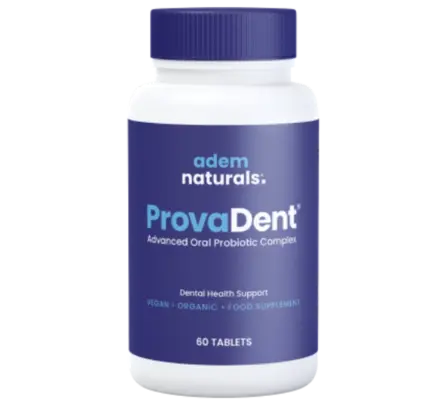 1
1 ProvaDent
The oral-health supplement we'd try first, if we were going to try one.
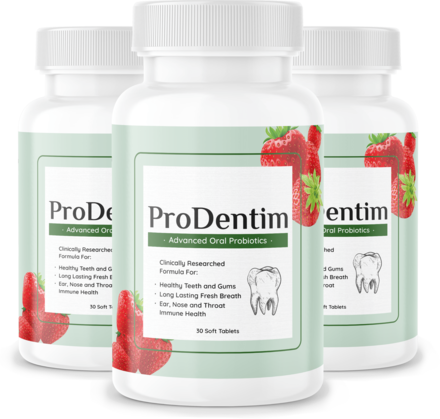 2
2 ProDentim
The best-known oral-probiotic chewable, and a reasonable second choice if you prefer a lozenge.
Rankings reflect formulation, value, and refund policy, not a proven cure. No supplement is proven to cure gum disease or regrow bone. Some links are affiliate links; we may earn a commission at no cost to you.
The best oral probiotics in 2026 are ones whose key strains have published clinical signal and that carry a real money-back guarantee. The evidence base is modest and strain-dependent, no branded finished product has its own independent trial, and the benefit tends to fade after you stop. That honest framing is more useful than any “top 10” list built on marketing copy.
The short answer
Oral probiotics can provide a small, adjunct benefit for gum bleeding, plaque, and bad breath when used alongside regular brushing, flossing, and professional cleaning. The strains with the best published signal are L. reuteri for gums and S. salivarius K12 for breath. Because no finished oral-probiotic brand has been independently trialled, the main consumer protection is a money-back guarantee that lets you test a product on yourself without permanent financial risk. ProvaDent and ProDentim are the two guarantee-backed picks worth considering.
What the evidence actually shows
The research on oral probiotics is better than for most supplement categories, which is exactly why it deserves a careful reading rather than hype.
A 2025 systematic review and meta-analysis covering 24 randomized controlled trials found that probiotics as adjunctive therapy produced a statistically significant but modest improvement in plaque index and bleeding on probing for periodontitis patients. The plaque effect had a 95% confidence interval of roughly -0.54 to -0.15 and the bleeding effect -0.58 to -0.05. Both intervals creep close to zero, which means the effect is real but far from dramatic. Pocket depth did not reach significance.
On the gingivitis side, a foundational randomized trial showed that L. reuteri reduced gum bleeding versus placebo with statistical significance. A systematic review focused on chronic periodontitis found that L. reuteri added to scaling and root planing produced modest improvements in pocket depth and clinical attachment in the majority of studies reviewed.
A broader review of probiotics and oral health published in PMC found signal for S. salivarius K12 reducing volatile sulfur compounds and competing with odor-producing bacteria, making it the best-studied strain for breath specifically.
Which strains have the best signal
Not all probiotic strains are equivalent, and most of the research has concentrated on a handful.
| Strain | Condition targeted | Evidence quality |
|---|---|---|
| L. reuteri DSM 17938 / ATCC PTA 5289 | Gum bleeding, plaque, pocket depth | Best in class; multiple RCTs and systematic reviews |
| L. reuteri RC-14 or other strains | Gingivitis adjunct | Moderate; varies by strain designation |
| S. salivarius K12 (BLIS K12) | Bad breath (halitosis) | Modest; small trials, breath-specific not gum-specific |
| L. acidophilus / L. rhamnosus blends | General oral flora support | Low; limited oral-specific trials |
| S. salivarius M18 | Dental caries support | Early signal only; insufficient for a buying claim |
The takeaway: look for L. reuteri if your primary concern is gums, and S. salivarius K12 if your primary concern is breath. A product listing generic “Lactobacillus blend” without named strains gives you nothing verifiable.
Why no branded product has its own trial
This is the most important honesty point in the whole category. Clinical trials test specific bacterial strains at defined doses in a controlled setting. They do not test ProvaDent, ProDentim, or any other branded oral-probiotic capsule as a finished, formulated product.
What that means in practice: when a brand cites “clinical studies” to support its product, those studies are on the strain class, not on the specific capsule you are buying. The probiotic load, the delivery mechanism (capsule vs. chewable vs. lozenge), the shelf-life viability of the live cultures, and the exact strain designations in the finished product have not been independently verified by a third-party trial. This is an industry-wide gap, not a fault specific to any one brand. The NIDCR notes that gum disease requires professional care and there is no supplement evidence strong enough to change that recommendation.
The honest framing: you are buying based on strain class evidence and then running a personal experiment. A money-back guarantee is what converts that experiment from a financial gamble into a low-risk trial.
What a “best” oral probiotic actually needs to offer
Given the modest evidence base, a reasonable oral probiotic should meet these criteria:
- Named strains on the label, ideally L. reuteri or S. salivarius K12 for the conditions you care about.
- A real money-back guarantee with a long enough window to judge a result. Sixty days is the minimum because the studies that show benefits run four to twelve weeks.
- Transparent dosing so you can compare the CFU count to the doses used in published studies.
- Honest marketing that does not claim the product cures gum disease, reverses bone loss, or replaces professional care.
ProvaDent and ProDentim both carry 60-day guarantees, which clears the most important bar. Neither makes surgical precision claims about their strains in their marketing, and neither has published an independent finished-product trial.
Bottom line
Use the oral probiotic CFU calculator to compare a label’s manufacture or expiry basis with an explicit planning assumption.
The best oral probiotics in 2026 are the ones with named, studied strains, honest labeling, and a real money-back guarantee. L. reuteri has the strongest published signal for gum health as an adjunct to professional care. S. salivarius K12 has the best signal for bad breath. No finished branded product has its own independent trial, so every purchase is a personal experiment, which is exactly why the guarantee matters. ProvaDent and ProDentim both carry 60-day guarantees and clear the minimum bar. Neither is a cure. Neither replaces your dentist. Used correctly as a small add-on to brushing, flossing, and professional cleaning, either is a low-risk experiment worth trying.
Related notes
- Do oral probiotics work for gum health?
- ProvaDent review: what the evidence supports
- ProDentim review: honest look at the evidence
- ProDentim vs ProvaDent: an honest head-to-head
- Probiotics for bad breath: what the evidence shows
- Oral probiotics vs regular probiotics: what is the difference?
- Are dental supplements worth it?
The bottom line
No supplement is proven to cure gum disease or regrow bone. We highlight ProvaDent for its formulation and guarantee, not as a cure. If you decide to try one, ProvaDent is the option we would pick, mainly because the 60-day money-back guarantee makes a trial risk-free.
Check Latest Price for ProvaDentFrequently asked questions
What are the best oral probiotics for gum health in 2026?
No branded oral probiotic has its own independent clinical trial, so 'best' is defined by the evidence behind the strain class and by consumer protections like a money-back guarantee. L. reuteri has the most studied strain signal as an adjunct to professional cleaning for gingivitis and early periodontitis. Products that contain studied strains and ship with a 60-day guarantee, such as ProvaDent and ProDentim, are the lowest-risk options for a personal trial, because you can get your money back if the product does not help you.
What is the best oral probiotic for bad breath?
S. salivarius K12, also known as BLIS K12, has the best studied signal specifically for bad breath (halitosis). It works by competing with odor-producing bacteria and reducing volatile sulfur compounds in the mouth. The evidence is from small trials, so the effect size varies, but it is the most targeted strain for breath rather than gum disease. Look for products that list it on the label, and confirm any product you buy has a money-back guarantee.
How long does it take for oral probiotics to work?
Most studies that show a benefit run for four to twelve weeks of daily use alongside good hygiene and professional cleaning. If you are going to see a noticeable effect, you are likely to notice it within six to eight weeks. Importantly, the benefit tends to fade about four weeks after you stop, because the introduced bacteria do not permanently colonize the mouth. Plan for this to be an ongoing supplement if it helps you, not a one-time fix.
Are oral probiotics safe?
The probiotic strains used in oral supplements, primarily Lactobacillus and Streptococcus strains, have a strong general safety profile in healthy adults. No serious adverse events appeared in the clinical trials reviewed in current meta-analyses. That said, people who are immunocompromised or have serious underlying health conditions should check with a doctor before adding any supplement. As with any supplement, the evidence of safety comes from the specific strains tested, not from any branded product as a whole.
Can oral probiotics replace brushing, flossing, or dental visits?
No. Every credible study on oral probiotics tests them as an addition to regular brushing, flossing, and professional cleaning, never as a substitute. The bacteria that cause gum disease are removed mechanically, and a probiotic capsule does not do that job. Treat any oral probiotic as a possible small add-on to a solid hygiene routine, not a replacement for it.
Sources & references
Every claim above is drawn from these primary sources.
- ● Clinical effects of probiotics on the treatment of gingivitis and periodontitis: a systematic review and meta-analysis · PMC (National Library of Medicine)
- ● Clinical effects of Lactobacillus reuteri probiotic in chronic periodontitis - a systematic review · PubMed (National Library of Medicine)
- ● Decreased gum bleeding and reduced gingivitis by the probiotic Lactobacillus reuteri · PubMed (National Library of Medicine)
- ● Gum Disease (Periodontal Disease) · NIDCR (National Institutes of Health)
- ● Use of Probiotics and Oral Health · PMC (National Library of Medicine)
Free checklist
The 12 checks to run on a gum supplement label before you pay for it.
A one-page checklist drawn from ADA, Cochrane Oral Health and NIH/NIDCR guidance, plus the FTC's own rules on supplement advertising. It tells you which label claims mean something, which are decoration, and the wording that signals a product is not worth your money. We send it immediately, then one short note a week.
One click to unsubscribe. We never sell or share your address. Privacy.