Quick answer
Gingivitis, the earliest stage of gum disease, can be fully reversed by removing the bacterial plaque that causes it. The mechanism is mechanical: brushing twice daily, flossing once daily, and getting at least one professional cleaning to remove hardened tartar. Most people see improvement in gum bleeding within two to four weeks of consistent home care. Periodontitis, the stage where bone loss has occurred, cannot be reversed by the same approach and requires professional management.
- Gingivitis is reversible because no bone or attachment loss has occurred yet; remove the plaque and the gum tissue heals
- The three required steps are daily brushing, daily flossing, and professional cleaning to clear tartar
- Periodontitis is not reversible: once bone and connective tissue are destroyed, treatment shifts to managing the disease
Short on time? Our pick
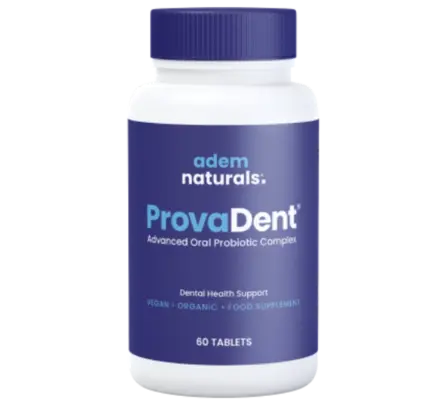
ProvaDent
Oral probiotic support
Our editorial score.Scored on formulation, refund policy, and value, not on a proven cure. No gum-disease supplement is clinically proven.
The oral-health supplement we'd try first, if we were going to try one.
- 60-day money-back guarantee, which covers the trial period if it does not help
- Sold through BuyGoods, which processes refunds reliably
- Aimed at the oral microbiome, the current focus of gum-health research
No supplement is proven to cure gum disease or regrow bone. We highlight ProvaDent for its formulation and guarantee, not as a cure.
Gingivitis, the earliest stage of gum disease, genuinely can be reversed, and the mechanism is straightforward: remove the bacterial plaque that is driving the inflammation, and the gum tissue returns to normal. That reversal happens through brushing, flossing, and professional cleaning, not through any supplement. The distinction between reversible gingivitis and irreversible periodontitis is one of the most useful things to understand about gum health, so this guide is precise about it.
The short answer
Gingivitis is reversible because the bone and connective tissue that anchor your teeth are not yet damaged. The inflammation is confined to the soft gum tissue, and plaque is the cause. Remove the plaque consistently through brushing, flossing, and at least one professional cleaning to clear hardened tartar, and the gums heal. Periodontitis, the stage where bone loss has occurred, cannot be reversed by the same approach. Distinguishing between the two is the first thing to get right.
Why gingivitis is reversible but periodontitis is not
The clinical difference comes down to what structures are affected.
In gingivitis, bacteria in plaque irritate the gum tissue and cause redness, swelling, and bleeding on probing. Critically, there is no loss of the periodontal ligament or alveolar bone. According to a StatPearls review on gingivitis, “there is no attachment loss and therefore no migration of the junctional epithelium,” which is the technical way of saying the supporting structure is intact. Remove the cause, and the inflamed tissue heals.
Periodontitis is a different situation. Once bacteria have penetrated deeper and triggered destruction of the bone and ligament, that tissue does not regenerate on its own. The InformedHealth.org overview on NCBI is direct about this: “periodontitis doesn’t go away on its own,” and even when the disease is controlled, “the lost tissue does not fully recover.” Treatment at that stage aims to halt further damage and manage the disease, not to undo what has already been lost.
This distinction matters because the marketing for supplements, oil pulling, and various home remedies often implies a reversal that is only possible if the disease has not yet progressed. Advertising a supplement as something that “reverses gum disease” conflates two conditions with very different prognoses.
What actually reverses gingivitis
The mechanism has three components. Each one matters; none is optional.
Daily brushing. Plaque is a sticky bacterial biofilm that reforms on teeth within hours. Brushing twice a day with a soft-bristled brush disrupts and removes the plaque before it can mature into a more harmful form. Proper technique matters: short strokes at a 45-degree angle to the gumline, gentle enough not to abrade tissue, thorough enough to reach the gumline itself.
Daily flossing. A toothbrush does not reach the spaces between teeth, where plaque accumulates and gingivitis frequently starts. Flossing once a day clears those interproximal surfaces. The NIDCR notes that plaque that is not removed can harden and form tartar, which brushing cannot clean. Flossing is the step that prevents that buildup in the spaces the brush misses.
Professional cleaning. Once plaque has calcified into tartar (calculus), no amount of home care removes it. Only a dental hygienist or dentist using professional instruments can scale it off. According to the ADA, gingivitis “can usually be eliminated by a professional cleaning at your dental office, followed by daily brushing and flossing.” For many adults with established plaque buildup, the professional cleaning step is what makes the reversal possible, not optional.
How long it takes
Most people see measurable improvement in gum bleeding within two to four weeks of consistent home care, assuming a professional cleaning has removed any tartar. The gums stop bleeding on probing, swelling subsides, and the characteristic redness fades as the inflammation resolves.
If gum bleeding continues beyond four weeks of genuinely consistent brushing and flossing, one of a few things is likely: tartar below the gum line that home care cannot reach, an underlying factor (such as a vitamin deficiency, hormonal change, or medication side effect), or progression to early periodontitis. Any of those scenarios calls for a dental visit, not a longer wait.
What does not reverse gingivitis
It is worth being plain about the things that are marketed as gingivitis treatments but do not address the mechanism.
| Approach | What it actually does |
|---|---|
| Brushing and flossing (consistent) | Removes plaque; the real mechanism of reversal |
| Professional scaling | Removes tartar that home care cannot reach |
| Antiseptic mouthwash | Reduces bacterial load modestly; can supplement but does not replace mechanical cleaning |
| Oral probiotics | Modest adjunct signal for gum bleeding reduction; does not remove plaque |
| Oil pulling | Low-quality evidence; does not remove calcified tartar |
| Herbal supplements | No credible evidence of reversing gingivitis |
| Vitamin supplements | Correct a deficiency if one exists; do not address plaque |
The pattern is consistent. Anything that skips the mechanical removal of plaque is working around the cause rather than addressing it. Mouthwash can help reduce bacterial counts as an add-on to a complete routine, but it does not substitute for flossing. Oral probiotics have some modest adjunct evidence (more detail at our guide to oral probiotics and gum health), but they too are an add-on, not the mechanism.
Building a routine that actually works
Consistency is the variable that matters most. A flawless technique used three times a week produces worse outcomes than adequate technique used twice every day. The following is a straightforward daily framework:
- Morning: Brush for two minutes, covering all surfaces, paying attention to the gumline. Floss all interproximal spaces.
- Evening: Brush again before bed. Consider an antiseptic rinse if your dentist recommends one.
- Every six months (minimum): Professional cleaning to remove tartar and monitor gum pocket depths.
If your gums bleed when you first start flossing consistently, that is a normal inflammatory response to disturbing an inflamed tissue. Persistent, regular bleeding is the problem, not a single episode during a new routine. Continue carefully and give it two weeks; the bleeding typically subsides as the inflammation resolves.
Bottom line
Gingivitis is genuinely reversible, and the way to reverse it is to remove the plaque causing it. That means brushing twice a day, flossing once a day, and getting at least one professional cleaning to clear any tartar your brush cannot reach. Most people see real improvement within a few weeks of doing all three consistently. Periodontitis, the stage beyond gingivitis where bone loss has occurred, is a different condition with different stakes: it can be managed but not reversed. If you have any uncertainty about which stage you are at, a dentist is the right person to ask. For most people with early, plaque-driven gingivitis, the tools to reverse it are a toothbrush, a roll of floss, and a dental appointment.
Related notes
The bottom line
No supplement is proven to cure gum disease or regrow bone. We highlight ProvaDent for its formulation and guarantee, not as a cure. If you decide to try one, ProvaDent is the option we would pick, mainly because the 60-day money-back guarantee makes a trial risk-free.
Check Latest Price for ProvaDentFrequently asked questions
Can you actually reverse gingivitis at home?
Yes, with an important caveat. Gingivitis caused by plaque buildup can be fully reversed by removing that plaque consistently through twice-daily brushing, daily flossing, and at least one professional cleaning to remove hardened tartar that home care cannot reach. The key word is 'gingivitis': if the disease has already progressed to periodontitis, which involves bone and attachment loss, it cannot be reversed by home care or any supplement. Only the early, plaque-driven stage is truly reversible.
How long does it take to reverse gingivitis?
Most people see meaningful improvement in gum bleeding and swelling within two to four weeks of consistent brushing and flossing, provided a professional cleaning has removed any tartar. The timeline depends on how much tartar has built up and how consistently you maintain the routine. Bleeding that persists beyond four weeks of good home care usually signals a need for a dental visit, since tartar below the gum line cannot be removed with a toothbrush.
What is the difference between gingivitis and periodontitis?
Gingivitis is inflammation confined to the soft gum tissue, with no damage to the underlying bone or connective tissue that holds teeth in place. That is why it is reversible: remove the plaque, the inflammation resolves, and the tissue returns to normal. Periodontitis is the stage where the bacteria have breached deeper and caused irreversible destruction of bone and periodontal attachment. That damage does not grow back. Periodontitis can be managed and stabilized, but not reversed.
Do supplements or probiotics reverse gingivitis?
No supplement reverses gingivitis. Gingivitis is reversed by removing the bacterial plaque that causes it, which is a mechanical process carried out by brushing, flossing, and professional cleaning. Oral probiotics have some adjunct evidence for modestly reducing gum bleeding when added to good hygiene, but they do not remove plaque and do not replace the mechanical steps. Treating a supplement as the fix while skipping daily cleaning is the fastest way to stay stuck.
When should I see a dentist for gingivitis?
You should see a dentist if your gums bleed regularly when you brush, if swelling or redness does not improve after two to four weeks of consistent home care, or if you have not had a professional cleaning in more than six months. Tartar that has formed below the gum line requires professional instruments to remove, and home care alone cannot fully resolve gingivitis once tartar is present.
Sources & references
Every claim above is drawn from these primary sources.
- ● Gingivitis · MouthHealthy (American Dental Association)
- ● Gum Disease · MouthHealthy (American Dental Association)
- ● Gingivitis - StatPearls · NCBI Bookshelf (National Library of Medicine)
- ● Overview: Gingivitis and Periodontitis · InformedHealth.org via NCBI Bookshelf
- ● Gum Disease (Periodontal Disease) · NIDCR (National Institutes of Health)
Free checklist
The 12 checks to run on a gum supplement label before you pay for it.
A one-page checklist drawn from ADA, Cochrane Oral Health and NIH/NIDCR guidance, plus the FTC's own rules on supplement advertising. It tells you which label claims mean something, which are decoration, and the wording that signals a product is not worth your money. We send it immediately, then one short note a week.
One click to unsubscribe. We never sell or share your address. Privacy.