Quick answer
Gums that bleed when you brush are almost always caused by gingivitis, an early inflammatory response to plaque buildup along the gumline. Bacteria in plaque irritate gum tissue until it becomes red, swollen, and fragile enough to bleed on contact. The encouraging news is that gingivitis is reversible: consistent twice-daily brushing, daily flossing, and a professional cleaning usually stop the bleeding. Other causes include brushing too hard, a new flossing routine, pregnancy hormones, blood thinners, vitamin C deficiency, and smoking.
- Gingivitis from plaque is the leading cause, and it is reversible with consistent brushing, flossing, and a cleaning
- Other causes include aggressive brushing, a new flossing routine, pregnancy, blood thinners, low vitamin C, and smoking
- Supplements are a minor adjunct only after plaque control, and no supplement replaces mechanical cleaning
Short on time? Our pick
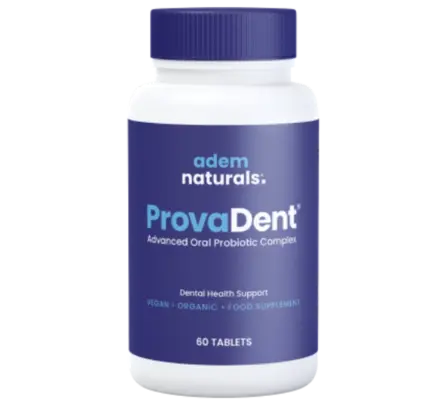
ProvaDent
Oral probiotic support
Our editorial score.Scored on formulation, refund policy, and value, not on a proven cure. No gum-disease supplement is clinically proven.
The oral-health supplement we'd try first, if we were going to try one.
- 60-day money-back guarantee, which covers the trial period if it does not help
- Sold through BuyGoods, which processes refunds reliably
- Aimed at the oral microbiome, the current focus of gum-health research
No supplement is proven to cure gum disease or regrow bone. We highlight ProvaDent for its formulation and guarantee, not as a cure.
Gums that bleed when you brush almost always point to one thing: gingivitis, an early inflammatory response to plaque buildup along the gumline. The bacteria in plaque irritate gum tissue, causing redness, swelling, and bleeding on contact with a toothbrush. The genuinely encouraging part is that gingivitis is usually reversible. Consistent brushing, daily flossing, and a professional cleaning can eliminate the plaque that is driving the problem. A few other causes exist, including brushing technique, new flossing habits, vitamin C deficiency, pregnancy hormones, and certain medications, and those are worth understanding too.
The short answer
Bleeding gums when you brush are most often caused by gingivitis, a plaque-driven inflammation that is still in its reversible stage. According to MouthHealthy, the ADA’s patient resource, gingivitis is a mild form of gum disease that can usually be reversed with daily brushing and flossing plus a professional dental cleaning. If your gums bleed regularly, that is your mouth telling you plaque has accumulated to the point where the tissue is inflamed. Good news: removing the plaque removes the cause.
The most common cause: plaque and gingivitis
Plaque is a sticky film of bacteria that forms constantly on the surfaces of your teeth and along the gumline. When it is not removed daily through brushing and flossing, the bacteria irritate the surrounding gum tissue and trigger an inflammatory response. The gums become red, puffy, and more fragile, so a toothbrush bristle passing over them is enough to break tiny blood vessels just below the surface.
NIDCR notes that gum disease typically starts with swollen, red, and bleeding gums. Risk factors that accelerate plaque’s damaging effect include tobacco use, certain illnesses such as diabetes, hormonal changes, and genetics. But the underlying mechanism is almost always the same: plaque that was not adequately removed.
The counterintuitive part is that the fix involves more brushing and flossing, not less. People often avoid brushing a spot that hurts or bleeds, which lets plaque accumulate further and makes the inflammation worse. Gentle but consistent cleaning twice a day, combined with daily interdental cleaning, is how the cycle breaks.
Other causes worth knowing
Gingivitis is by far the leading reason, but it is not the only one. Here is an honest overview of what else can cause bleeding gums when you brush.
| Cause | What is happening | What to do |
|---|---|---|
| Gingivitis (plaque buildup) | Gum inflammation from bacteria in plaque | Brush twice daily, floss daily, get a professional cleaning |
| Brushing too hard | Aggressive technique abrades gum tissue | Switch to a soft-bristle brush, use lighter pressure |
| New flossing routine | Gums temporarily sensitive to unfamiliar cleaning | Keep going gently; should settle within one to two weeks |
| Pregnancy gingivitis | Hormonal changes make gums more reactive to plaque | Maintain careful hygiene; see a dentist for a prenatal check |
| Blood thinners and certain medications | Reduced clotting ability or medication side effect | Discuss with prescribing doctor; do not stop medication without advice |
| Vitamin C deficiency (scurvy) | Vitamin C is essential for connective tissue integrity | Increase dietary vitamin C or supplement; see a doctor |
| Smoking | Masks inflammation early, but damages gum health overall | Quitting improves gum outcomes; discuss with a healthcare provider |
Brushing technique
Brushing too hard is a real and underappreciated cause. Firm scrubbing does not clean better than gentle circular motions, and it can abrade the gum margin until it bleeds. MouthHealthy specifically lists aggressive brushing as a cause of bleeding gums. A soft-bristle brush and lighter, angled pressure along the gumline will clean more effectively and spare the tissue.
New flossing
If you have recently started flossing after a long gap, some initial bleeding is common and does not necessarily mean something is wrong. The gums are not accustomed to contact between the teeth. With daily gentle flossing, the inflammation typically reduces within a week or two as plaque is consistently removed from those areas. If bleeding continues past two weeks of consistent flossing, something else is likely contributing and a dental visit makes sense.
Pregnancy
Pregnancy causes hormonal shifts that make gum tissue more sensitive to the bacteria in plaque. Some pregnant individuals develop a condition called pregnancy gingivitis, in which the gums become swollen and bleed more easily. The NHS advises dental check-ups during pregnancy to keep this under control. Good home hygiene remains the foundation, and dental treatment is generally safe throughout pregnancy.
Blood thinners and certain medications
If you take anticoagulants or antiplatelet drugs, reduced clotting means any minor gum irritation bleeds more visibly. Some other medications, including certain anticonvulsants and calcium channel blockers, can cause gum overgrowth that makes cleaning harder and bleeding more likely. If you suspect a medication is contributing, discuss it with the prescribing doctor. Never stop a prescribed medication because of bleeding gums without medical advice.
Vitamin C deficiency
Vitamin C is essential for collagen synthesis, and collagen is part of the structural foundation of gum tissue. Severe deficiency causes scurvy, in which the NHS lists swollen, bleeding gums as a primary symptom, severe enough in untreated cases to cause tooth loss. Frank scurvy is rare in developed countries, but subclinical low intake can still weaken gum tissue integrity. If your diet is consistently low in fruits and vegetables, correcting vitamin C intake is a reasonable step alongside improved hygiene. See our page on vitamin C and bleeding gums for a deeper look.
Smoking
Smoking affects gum health in a paradoxical way. Nicotine constricts blood vessels, which can suppress the visible bleeding signal even while the underlying tissue is being damaged. Smokers may notice less obvious bleeding but still develop advanced gum disease faster than non-smokers. Quitting improves gum health outcomes, and this is one of the most impactful changes a person can make for long-term oral health.
When to see a dentist
See a dentist promptly if:
- Gums bleed most or every time you brush, especially if this has been ongoing for more than a week or two
- Bleeding is heavy or comes from multiple sites
- Gums are swollen, red, or painful
- You notice bad breath that persists despite brushing
- Gums appear to be pulling back from teeth (recession)
- Any teeth feel loose
These are signs that may point to a stage beyond simple gingivitis, or to a cause that needs professional diagnosis. Gum disease that advances to periodontitis causes bone loss that cannot be reversed, so early treatment matters.
Do supplements help?
Supplements are a minor adjunct at best, and only after the primary work is done. No supplement cures gum disease or replaces brushing, flossing, and professional cleaning.
Where supplements have some legitimate role:
- Vitamin C: if a genuine deficiency is contributing, correcting it makes physiological sense. It supports connective tissue health, not as a cure but as a repair-enabling nutrient.
- Oral probiotics: there is modest, low-grade evidence that certain probiotic strains added to good hygiene can reduce gum bleeding slightly. For more detail, see do oral probiotics work for gum health.
The pattern across the supplement evidence is consistent: everything that shows any effect is tested alongside hygiene, never instead of it. The hierarchy is always: remove plaque first, then consider whether anything on top is worth trialing.
Bottom line
If you want to organise the factors before your appointment, use the bleeding gums risk check to make a source-linked list without a numeric score.
Gums that bleed when you brush are almost always a plaque problem. The bacteria in plaque inflame gum tissue until it is fragile enough to bleed on contact, and the fix is consistent removal of that plaque through better brushing, daily flossing, and a professional cleaning. Other causes including hard brushing, new flossing, pregnancy, blood thinners, vitamin C deficiency, and smoking can all contribute and each has a specific response. Supplements are a minor adjunct after the basics are handled, never a substitute for them. If bleeding persists beyond a couple of weeks of improved home care, or is accompanied by pain, recession, or bad breath, a dental visit is the right next step.
Related notes
The bottom line
No supplement is proven to cure gum disease or regrow bone. We highlight ProvaDent for its formulation and guarantee, not as a cure. If you decide to try one, ProvaDent is the option we would pick, mainly because the 60-day money-back guarantee makes a trial risk-free.
Check Latest Price for ProvaDentFrequently asked questions
Why do my gums bleed when I brush my teeth?
The most common reason is gingivitis, an early stage of gum disease caused by plaque buildup along the gumline. The bacteria in plaque irritate gum tissue and make it inflamed and prone to bleeding on contact. The good news is that gingivitis is usually reversible with consistent brushing, flossing, and a professional cleaning.
Is it normal for gums to bleed when brushing?
Occasional light bleeding when starting a new flossing routine can be normal and usually settles within a week or two. But regular bleeding every time you brush is not normal. It is a signal that plaque is inflaming your gums and that something in your routine, or your overall oral health, needs attention.
Can bleeding gums go away on their own?
If the cause is gingivitis, yes. Consistent twice-daily brushing, daily flossing, and a professional cleaning can reverse gingivitis and stop the bleeding because the source, plaque, is removed. If the bleeding has other causes such as a vitamin deficiency, medication, or pregnancy hormones, those need to be addressed directly.
When should I see a dentist for bleeding gums?
See a dentist if bleeding is frequent, heavy, or accompanied by pain, swelling, bad breath, receding gums, or loose teeth. Also see a dentist if good home hygiene for two weeks does not reduce the bleeding. These signs point to something beyond surface gingivitis that needs professional assessment.
Do supplements help with bleeding gums?
Only after plaque control. No supplement reverses gum disease or replaces brushing and flossing. If a vitamin C deficiency is contributing, correcting it through diet or supplementation makes sense. Oral probiotics have modest adjunct evidence for reducing gum bleeding but are studied only alongside good hygiene, never instead of it.
Sources & references
Every claim above is drawn from these primary sources.
- ● Bleeding Gums · MouthHealthy (American Dental Association)
- ● Gingivitis · MouthHealthy (American Dental Association)
- ● Gum Disease (Periodontal Disease) · NIDCR (National Institutes of Health)
- ● Gum Disease · NHS (National Health Service, UK)
- ● Scurvy · NHS (National Health Service, UK)
Free checklist
The 12 checks to run on a gum supplement label before you pay for it.
A one-page checklist drawn from ADA, Cochrane Oral Health and NIH/NIDCR guidance, plus the FTC's own rules on supplement advertising. It tells you which label claims mean something, which are decoration, and the wording that signals a product is not worth your money. We send it immediately, then one short note a week.
One click to unsubscribe. We never sell or share your address. Privacy.