Quick answer
Most bad breath comes from odor-producing bacteria on the tongue and between the teeth, with dry mouth and gum disease as the other main drivers. Getting rid of it requires daily tongue cleaning, proper brushing and flossing, treating dry mouth, and professional treatment for gum disease if present. No single product or supplement eliminates bad breath permanently: it is manageable with consistent habits, not curable with a one-time fix.
- The tongue is the biggest reservoir of odor-causing bacteria; daily tongue cleaning is the most-skipped high-impact step
- Dry mouth worsens breath, so hydration and limiting alcohol and caffeine matter
- Oral probiotics give a modest short-term effect that fades, and do not replace mechanical cleaning
Short on time? Our pick
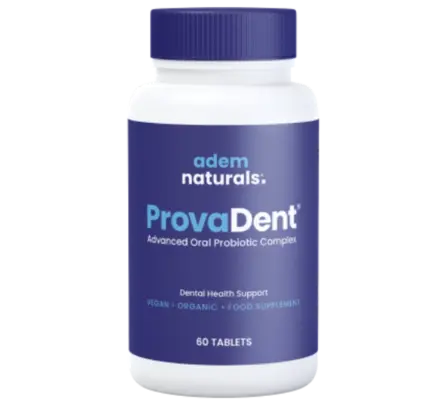
ProvaDent
Oral probiotic support
Our editorial score.Scored on formulation, refund policy, and value, not on a proven cure. No gum-disease supplement is clinically proven.
The oral-health supplement we'd try first, if we were going to try one.
- 60-day money-back guarantee, which covers the trial period if it does not help
- Sold through BuyGoods, which processes refunds reliably
- Aimed at the oral microbiome, the current focus of gum-health research
No supplement is proven to cure gum disease or regrow bone. We highlight ProvaDent for its formulation and guarantee, not as a cure.
Getting rid of bad breath comes down to addressing its source: most cases are caused by odor-producing bacteria on the tongue and between the teeth, with dry mouth and gum disease as the other major drivers. The honest truth about “permanently” getting rid of it is that bad breath is manageable, not one-and-done curable. With the right daily habits and treatment of any underlying condition, most people can achieve consistently fresh breath. No supplement, spray, or rinse delivers a permanent fix on its own.
The short answer
Bad breath is caused mainly by volatile sulfur compounds produced by oral bacteria, most of which live on the back of the tongue. The fixes that work are mechanical and behavioral: clean your tongue every day, brush and floss properly, treat dry mouth, get gum disease treated if you have it, and see a dentist to rule out causes you cannot identify yourself. Oral probiotics may add a small short-term adjunct benefit, but they sit at the end of that list, not the beginning.
Why the tongue is the biggest piece of the puzzle
The ADA’s MouthHealthy resource identifies oral bacteria as the primary cause of bad breath: hundreds of bacterial types naturally inhabit your mouth and produce odorous waste as they break down food debris. The bulk of those bacteria, and the thickest accumulation of organic matter they feed on, lives on the dorsum of the tongue, particularly toward the back.
A randomized controlled trial published in PMC found that all three mechanical cleaning approaches tested (toothbrush, tongue scraper, or both) significantly reduced both tongue coating scores and assessor-rated bad breath. The critical finding: technique matters more than tool. Consistent strokes from the back of the tongue to the front is what drives the reduction, not the specific implement. A Cochrane-level review of tongue scraper trials found a small but statistically significant advantage for scrapers over toothbrushes in reducing volatile sulfur compounds, but the difference was modest.
If you brush twice a day but never clean your tongue, you are leaving the single biggest reservoir of odor-causing bacteria untouched.
The other mechanical fixes that matter
| Step | Why it helps | How to do it |
|---|---|---|
| Tongue cleaning | Removes the main bacterial reservoir | Scrape or brush back-to-front once daily |
| Brushing twice daily | Removes plaque from tooth surfaces | Two minutes, fluoride toothpaste, gentle pressure |
| Flossing daily | Removes food and bacteria from between teeth | Where a brush cannot reach, bacteria can accumulate |
| Antibacterial mouthwash | Short-term bacterial load reduction | Alcohol-free formulas are gentler and less drying |
| Dental cleaning | Removes tartar that brushing cannot touch | Every six months, or more often with gum disease |
The NHS lists these steps explicitly as the core treatment for bad breath, with tongue cleaning named separately from brushing because the two address different bacterial sites.
Dry mouth: the underrated driver
Saliva is your mouth’s natural rinse. It breaks down food particles, buffers acids, and keeps bacterial populations in check. When saliva flow drops, whether from medication, chronic mouth breathing, dehydration, or a medical condition, bacteria multiply faster and the odor compounds they produce accumulate more quickly.
The ADA describes dry mouth (xerostomia) as a direct contributor to halitosis and recommends sipping water frequently, chewing sugar-free gum to stimulate saliva, and avoiding alcohol and caffeine, which reduce saliva production. For persistent dry mouth caused by medication or a health condition, a dentist or physician can advise on saliva substitutes or prescription treatments.
Staying hydrated is one of the cheapest, most overlooked steps for fresher breath.
Gum disease needs professional treatment, not just hygiene
The ADA identifies advanced gum disease as a cause of persistent bad breath and bad taste that home hygiene alone cannot resolve. When plaque bacteria accumulate below the gumline, they produce the same volatile sulfur compounds responsible for tongue odor, but in an environment that toothbrushes and scrapers cannot reach. Scaling and root planing (professional cleaning of the root surfaces) is the standard treatment.
The Cleveland Clinic puts it plainly: treating the underlying condition is the only real cure for bad breath caused by that condition. If your breath does not improve with improved home hygiene, a dental visit is the appropriate next step, not a stronger mouthwash or a supplement.
What about probiotics for bad breath?
A meta-analysis of seven randomized controlled trials found that certain probiotic strains, including Lactobacillus salivarius, Lactobacillus reuteri, Streptococcus salivarius, and Weissella cibaria, reduced organoleptic (smell-assessed) scores and volatile sulfur compound levels compared with placebo at four weeks or less. Beyond four weeks, the volatile sulfur compound reductions were no longer statistically significant, though some improvement in odor scores persisted.
The honest reading: oral probiotics may provide modest short-term relief for bad breath, but the effect is small, the evidence base has high heterogeneity, and there is no long-term signal on the chemical measure. They are a maintenance-dependent adjunct, not a standalone fix. They also will not substitute for tongue cleaning or treating gum disease.
Bottom line
Use the bad breath cause finder if you want to sort the timing and related symptoms into a source-linked category before seeking care.
Bad breath is manageable for most people, but “permanently” is an overstatement. The fixes that actually work are mechanical: daily tongue cleaning, brushing, flossing, treating dry mouth, getting gum disease properly treated, and a dental visit if home hygiene does not resolve it. Mouthwash and oral probiotics are add-ons that can support a solid routine but cannot carry it. If your breath problem is persistent and does not respond to improved home care, a dentist can identify whether the cause is gum disease, dry mouth, or something that needs medical attention. That visit is almost always worth more than any supplement.
Related notes
The bottom line
No supplement is proven to cure gum disease or regrow bone. We highlight ProvaDent for its formulation and guarantee, not as a cure. If you decide to try one, ProvaDent is the option we would pick, mainly because the 60-day money-back guarantee makes a trial risk-free.
Check Latest Price for ProvaDentFrequently asked questions
Can you get rid of bad breath permanently?
Not with a single fix, no. Bad breath is caused by oral bacteria, tongue coating, dry mouth, gum disease, or underlying medical conditions, and the fix depends on the cause. Most people can achieve consistently fresh breath by maintaining a good daily oral hygiene routine and treating root causes, but it requires ongoing habits, not a one-time cure.
Why do I have bad breath even after brushing?
Brushing cleans tooth surfaces but leaves the tongue, which harbors the most odor-causing bacteria, mostly untouched. If you brush but skip tongue cleaning, the bacteria responsible for volatile sulfur compounds (the gases that cause the smell) quickly recolonize. Gum disease, dry mouth, and food particles between teeth are also common reasons freshness does not last after brushing alone.
Does tongue scraping actually help bad breath?
Yes, and it is one of the most evidence-supported simple steps you can take. Multiple studies confirm that mechanical tongue cleaning, whether with a scraper or toothbrush, significantly reduces odor-causing bacteria and tongue coating. Tongue scrapers show a small edge over toothbrushes for reducing volatile sulfur compounds, but technique matters more than the tool.
Does drinking more water help bad breath?
Yes, in the sense that dry mouth is a significant driver of bad breath. Saliva washes away food particles and bacteria; when saliva flow drops, odor-causing bacteria multiply. Staying hydrated, avoiding alcohol and caffeine, and chewing sugar-free gum to stimulate saliva all help. For persistent dry mouth from medication or a health condition, a dentist or doctor can advise on additional treatment.
Can oral probiotics help with bad breath?
Modestly and only in the short term. A meta-analysis of randomized controlled trials found that certain probiotic strains reduced organoleptic scores and volatile sulfur compounds at four weeks or less, but long-term volatile sulfur compound reductions were not statistically significant. Probiotics are a maintenance-dependent adjunct, not a standalone treatment, and no branded oral probiotic product has an independent clinical trial of the finished formula.
Sources & references
Every claim above is drawn from these primary sources.
- ● Bad breath: NHS · NHS (UK National Health Service)
- ● Bad Breath (Halitosis): Causes and Treatments · MouthHealthy (American Dental Association)
- ● The Effect of Mechanical Tongue Cleaning on Oral Malodor and Tongue Coating · PMC (National Library of Medicine)
- ● Tongue scrapers have short-term efficacy in controlling halitosis (Cochrane review) · PubMed (National Library of Medicine)
- ● Efficacy of probiotics in the management of halitosis: systematic review and meta-analysis · PubMed (National Library of Medicine)
- ● Xerostomia (Dry Mouth) · American Dental Association
Free checklist
The 12 checks to run on a gum supplement label before you pay for it.
A one-page checklist drawn from ADA, Cochrane Oral Health and NIH/NIDCR guidance, plus the FTC's own rules on supplement advertising. It tells you which label claims mean something, which are decoration, and the wording that signals a product is not worth your money. We send it immediately, then one short note a week.
One click to unsubscribe. We never sell or share your address. Privacy.