Quick answer
ProDentim side effects are uncommon and mostly mild in healthy adults. The probiotic strains it contains have well-documented safety records with no severe adverse events in healthy populations. The most likely issue is mild, temporary gas or bloating from inulin, the chicory-root prebiotic in the formula, which ferments slowly in the gut. People with immune conditions, cardiac valve problems, or recent serious illness should consult a doctor before taking any live probiotic.
- ProDentim's strains are well tolerated in healthy adults, but there is no independent safety trial of the finished product
- Inulin is the most likely source of mild gas or bloating, especially in people with IBS or FODMAP sensitivity
- Immunocompromised people and those with cardiac valve abnormalities should consult a doctor before use
Short on time? Our pick
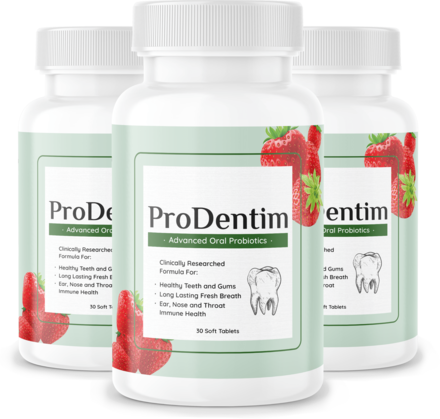
ProDentim
Oral probiotic chewable
Our editorial score.Scored on formulation, refund policy, and value, not on a proven cure.
The best-known oral-probiotic chewable, and a reasonable second choice if you prefer a lozenge.
- 60-day money-back guarantee, which covers the trial period if it does not help
- Chewable format some people stick with more easily than capsules
- Sold through BuyGoods, which processes refunds reliably
No independent trial shows ProDentim reduces gum disease. We rank it just below ProvaDent on formulation, and the 60-day refund window is the only thing that makes a trial reasonable.
ProDentim side effects are uncommon and mostly mild in healthy adults. The probiotic strains in the formula belong to a class with a well-documented safety record, and clinical trials of the core strain, Lactobacillus reuteri, have found no severe adverse events in healthy participants. The main exception is digestive sensitivity from inulin, the chicory-root prebiotic in the formula, which can cause gas or bloating in people with sensitive guts. And there is one honest caveat that applies to all live probiotic supplements: people with immune conditions should check with a doctor first.
The short answer
ProDentim is a chewable oral-probiotic formula containing Lactobacillus reuteri, Lactobacillus paracasei, Bifidobacterium lactis, Streptococcus salivarius, and inulin as a prebiotic. For the typical healthy adult, the side-effect profile is low. The most likely issue is mild, temporary digestive discomfort from inulin, which ferments in the gut and can cause gas. The more serious theoretical risks apply only to specific vulnerable groups and are extremely rare in otherwise healthy people. There is no published safety trial of ProDentim as a finished product, so the reassurance comes from strain-level research rather than product-level proof.
What the strain-level safety research shows
The most-studied ingredient in ProDentim’s class is Lactobacillus reuteri DSM 17938. A randomized masked trial of this strain in healthy adults, published in PLoS One and indexed in PMC, tracked participants over two months. The investigators found no severe adverse events and no statistically significant difference in adverse-event rates between the probiotic group and the placebo group. Common mild symptoms such as headaches, nasal congestion, and loose stools were reported in both groups at similar rates, confirming they were background-noise effects rather than probiotic-specific reactions.
That matches the broader picture. Systematic reviews of oral probiotics, including this meta-analysis of periodontal outcomes, note that the probiotic strains studied are generally well tolerated in healthy adults. Serious adverse events linked to probiotic Lactobacilli in healthy populations are rare enough that they show up only in case reports, not in clinical trial populations.
The main real-world side effect: inulin and digestive sensitivity
The ingredient most likely to cause a noticeable effect in sensitive individuals is inulin, not the probiotics themselves. Inulin is a soluble fiber derived from chicory root that acts as a prebiotic, feeding the bacteria in the colon. The problem is that gut bacteria ferment inulin slowly, producing gas as a byproduct. Because the fermentation is delayed, symptoms like bloating or gas can appear hours after taking the supplement, making the connection easy to miss.
A few practical points on this:
- The gas effect is dose-dependent. At low amounts, most people adapt within one to two weeks as the gut microbiome adjusts.
- The symptoms are self-limiting. Stopping the supplement resolves them promptly.
- The effect is not unique to ProDentim. It applies to any inulin-containing product and to prebiotic fiber supplements generally.
- People with IBS, SIBO, fructan sensitivity, or who follow a low-FODMAP diet are more likely to react. For those individuals, even modest inulin amounts can trigger bloating and cramps that others would not notice at all.
This is not a danger signal. It is a predictable biochemistry effect that is worth knowing about before you start so you are not surprised by it.
Who should use caution or consult a doctor
The side-effect profile of probiotic Lactobacilli is not uniformly low across all populations. A published precautions review in PMC identifies groups where the risk-benefit calculation shifts:
| Group | Why caution applies |
|---|---|
| Immunocompromised individuals (HIV/AIDS, transplant recipients, chemotherapy patients) | Rare but documented risk of Lactobacillus bacteremia; immune system cannot contain the bacteria adequately |
| Severe inflammatory bowel disease with active mucosal damage | Compromised gut lining may allow bacterial translocation |
| People with cardiac valve abnormalities or prosthetic heart valves | Case reports of endocarditis associated with probiotic use |
| Recent surgery, especially gastrointestinal or cardiothoracic | Increased infection risk in the perioperative window |
| Critically ill patients or those with central venous catheters | Standard clinical guidance recommends against live-bacteria supplements in this context |
| Pregnant or nursing individuals | No known harm but no systematic safety data either; check with a doctor |
| Children under medical supervision | Consult a pediatrician before adding any supplement |
For a healthy adult with no immune conditions and no recent surgery, these concerns do not apply in any practical sense. They apply to a specific and identifiable minority. The honest position is to name them clearly rather than wave them away.
What ProDentim does not have: a finished-product safety trial
There is an important distinction that every review of ProDentim should make clearly. The safety evidence above applies to the individual strains, studied in isolation in clinical settings, not to ProDentim as a packaged chewable formula. No independent randomized trial has assessed the safety or efficacy of the ProDentim finished product. The same is true of virtually every branded oral probiotic on the market.
This does not mean the product is unsafe. Extrapolating from well-studied strain data is reasonable. It does mean that when the product page implies clinical backing for the specific formula, that claim is not supported by published trial evidence. An honest reader should know the difference between “the strain class is well studied” and “this product has been clinically tested.” The first is true. The second is not.
Bottom line
ProDentim side effects are unlikely to be serious for a healthy adult. The main risks are mild and temporary: gas or bloating from inulin fermentation in the early weeks, and the very small chance that the product simply does not produce a noticeable oral-health effect. The probiotic strains have a solid safety record in healthy populations. The important caveats apply to people with immune conditions, valve problems, or recent serious illness, and those individuals should consult a doctor before taking any live-bacteria supplement. There is no independent trial of the ProDentim formula itself, so all reassurance is strain-class evidence, not product proof. With a 60-day money-back guarantee, the financial risk is low enough that a short trial is reasonable for most people, as long as expectations are realistic about what an oral probiotic can and cannot do.
Related notes
The bottom line
No independent trial shows ProDentim reduces gum disease. We rank it just below ProvaDent on formulation, and the 60-day refund window is the only thing that makes a trial reasonable. If you decide to try one, ProDentim is the option we would pick, mainly because the 60-day money-back guarantee makes a trial risk-free.
Check ProDentim Price for ProDentimFrequently asked questions
Does ProDentim cause side effects?
For most healthy adults, ProDentim is unlikely to cause significant side effects. The probiotic strains it contains have well-documented safety profiles in healthy populations. The most common reactions, if any, are mild and transient digestive effects such as gas or bloating, driven mainly by the inulin (chicory-root prebiotic) in the formula. These tend to settle within one to two weeks. No severe adverse events have been linked to the probiotic strains in its class in healthy adults.
Who should not take ProDentim?
People with compromised immune systems, those recovering from surgery, anyone with a serious underlying illness, and people with central venous catheters should consult a doctor before taking any live probiotic, including ProDentim. Those with IBS, SIBO, FODMAP sensitivity, or known reactions to inulin or chicory-root fiber may experience more pronounced digestive discomfort. Pregnant or nursing individuals should also check with a healthcare provider first.
Can ProDentim cause stomach upset or bloating?
It can in sensitive individuals, mainly because of the inulin it contains. Inulin is a fermentable fiber that gut bacteria break down slowly, producing gas as a byproduct. This is a known effect of inulin and prebiotics generally, not unique to ProDentim. The effect is dose-dependent and usually mild; most people adapt within a couple of weeks. If bloating persists, stopping the supplement will resolve it.
Has ProDentim been tested in a clinical trial for safety?
No. There is no published independent safety or efficacy trial of the ProDentim finished product. The safety reassurance comes from studies of the individual strains it contains, such as Lactobacillus reuteri, which have been shown to be well tolerated in healthy adults in separate randomized trials. That is reasonable indirect evidence, but it is not the same as a trial of the packaged supplement itself.
What is the most realistic risk from taking ProDentim?
For a healthy adult with no immune conditions, the realistic risk is mild and temporary digestive discomfort from inulin fermentation, and the very small possibility that the product does not help at all. The 60-day money-back guarantee makes the financial risk minimal. The more serious but rare risk of probiotic bacteremia applies primarily to immunocompromised individuals, not to healthy users.
Sources & references
Every claim above is drawn from these primary sources.
- ● Safety and Tolerability of Lactobacillus reuteri DSM 17938 in Healthy Adults · PMC (National Library of Medicine)
- ● Probiotic Lactobacilli Precautions · PMC (National Library of Medicine)
- ● Why Does Inulin Cause So Much Digestive Confusion? · FoodMarble
- ● Probiotics: Risks and Benefits · WebMD
- ● Oral probiotics and periodontal parameters - meta-analysis · PMC (National Library of Medicine)
Free checklist
The 12 checks to run on a gum supplement label before you pay for it.
A one-page checklist drawn from ADA, Cochrane Oral Health and NIH/NIDCR guidance, plus the FTC's own rules on supplement advertising. It tells you which label claims mean something, which are decoration, and the wording that signals a product is not worth your money. We send it immediately, then one short note a week.
One click to unsubscribe. We never sell or share your address. Privacy.