Quick answer
The best vitamins for healthy gums are vitamin C (strongest evidence, but mainly by correcting deficiency), vitamin D (observational association, thin trial evidence), and calcium (structural support for jaw bone). CoQ10 has the weakest evidence and is not recommended as a front-line supplement. For well-nourished adults, no vitamin meaningfully improves gum health beyond what plaque removal through brushing, flossing, and professional cleaning already achieves.
- Vitamin C supports gums mainly by correcting deficiency; extra above adequate intake shows little added benefit
- Vitamin D has plausible mechanisms and observational support, but the trial evidence is thin
- CoQ10 is the weakest option, with very uncertain, high-risk-of-bias evidence
Our top picks at a glance
 1
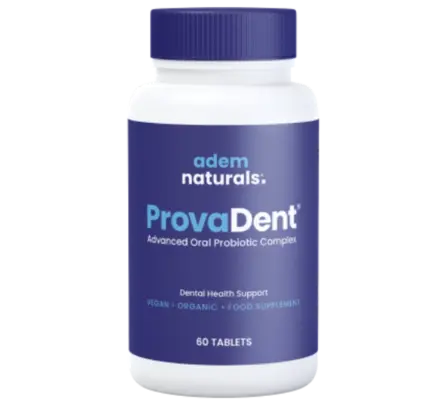
1 ProvaDent
The oral-health supplement we'd try first, if we were going to try one.
 2
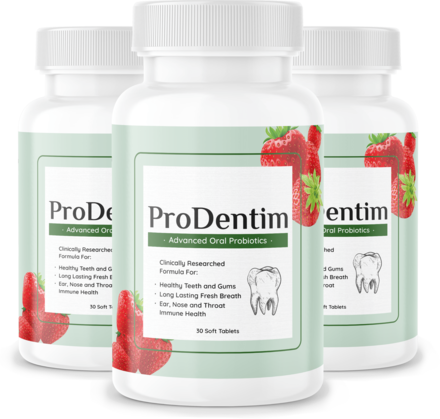
2 ProDentim
The best-known oral-probiotic chewable, and a reasonable second choice if you prefer a lozenge.
Rankings reflect formulation, value, and refund policy, not a proven cure. No supplement is proven to cure gum disease or regrow bone. Some links are affiliate links; we may earn a commission at no cost to you.
The best vitamins for healthy gums are vitamin C (strongest link, but only meaningful if you are correcting a deficiency), vitamin D (observational association, weak trial evidence), and calcium (structural, supports the bone that anchors teeth). CoQ10 sits at the bottom of the list: plausible mechanism, very weak and conflicting trial evidence. Critically, no vitamin treats or reverses gum disease in well-nourished people. The real mechanism of gum protection is plaque removal through brushing, flossing, and professional cleaning, and no supplement replaces that.
The short answer
Vitamins support gum health mainly by keeping you out of deficiency. A genuine vitamin C or vitamin D shortage creates conditions that make gums more vulnerable to disease. Topping up from adequate to high, however, adds little measurable benefit according to the best available reviews. If your gums bleed or are inflamed, your first call should be to a dentist, not a supplement shop.
Vitamin C: the strongest evidence, with an important caveat
Vitamin C is essential for collagen synthesis, which forms the connective tissue and ligament that hold teeth in the jaw and keep gum tissue intact. When vitamin C falls very low, the classic result is scurvy: swollen, bleeding, friable gums. That direct mechanism is well-established.
At the population level, a systematic review of 14 studies found that people with lower vitamin C intake or serum levels had higher rates of periodontal disease across cross-sectional, case-control, and cohort designs. A more recent meta-analysis of 16 studies reported a pooled odds ratio of 1.52 linking low vitamin C to periodontal risk, though the authors flag very high heterogeneity (I2 of 95%) and emphasize caution.
The intervention data is where the caveat bites. The systematic review found that vitamin C supplementation improved gingival bleeding in gingivitis but showed “no additional effect” on periodontitis or alveolar bone once disease was established. The most honest reading: correcting a deficiency helps; piling on extra when you are already replete does very little. Adults should be getting around 65 to 90 mg of vitamin C daily from food (peppers, citrus, leafy greens meet this easily), and most already do.
Vitamin D: observational signal, thin trial evidence
Vitamin D has plausible mechanisms for gum health. It supports calcium absorption and bone metabolism, which matters for the alveolar bone that holds teeth. It also has anti-inflammatory and antimicrobial effects that could in theory reduce periodontal inflammation.
The observational data are broadly supportive: lower serum vitamin D is associated with worse periodontal status in multiple studies. But association is not the same as causation, and many people with low vitamin D also have other risk factors for gum disease.
A 2023 systematic review on vitamin D and periodontal health found that only four studies met its inclusion criteria from nearly 1,900 papers screened. Of those, three were small RCTs with 18 to 96 participants and follow-up of 8 to 48 weeks. The review concluded there is a linear association between vitamin D and periodontal health, but “the evidence is insufficient” for firm clinical recommendations.
Correcting a vitamin D deficiency is a sound general health goal. Treating it as a proven gum therapy goes beyond what the current evidence supports.
Calcium: foundational, not therapeutic
Calcium is the primary mineral in tooth enamel and in the alveolar bone that surrounds tooth roots. Getting adequate calcium across your life helps maintain the structural platform that keeps teeth stable. The ADA and dietary guidelines emphasize calcium for bone and tooth formation, particularly in childhood and adolescence.
For established gum disease, calcium supplementation is not a treatment. Its role is structural and preventive: a diet consistently low in calcium over years can contribute to reduced bone density in the jaw, which may worsen the consequences of untreated periodontal disease. But calcium supplements do not reduce gingival inflammation or reverse pocket depth. Think of calcium as infrastructure support, not a therapeutic intervention.
CoQ10: weakest evidence, not recommended as a first choice
Coenzyme Q10 appears at lower levels in gingival tissue of people with periodontitis, which sparked interest in it as a supplement. Some small trials have tested CoQ10 as an add-on to scaling and root planing.
The honest summary comes from a 2023 systematic review of 17 randomized trials on CoQ10 in non-surgical periodontitis therapy. Its conclusion: “the current evidence is very uncertain regarding an additional benefit.” Thirteen of the 17 included studies had high risk of bias. Protocols varied so widely in dose, formulation, and delivery method that no firm comparison is possible. About half the studies showed some improvement in probing depth; the other half found no effect.
Until higher-quality, standardized trials exist, CoQ10 sits at the bottom of any evidence-ranked vitamin list for gum health.
Evidence comparison at a glance
| Nutrient | Best evidence level | Main finding | Who benefits most |
|---|---|---|---|
| Vitamin C | Systematic reviews, meta-analysis | Deficiency raises periodontal risk; correction helps; extra above adequate does not | People with low dietary vitamin C |
| Vitamin D | Small RCTs, observational data | Association with better periodontal health; trial evidence thin | People with documented deficiency |
| Calcium | Dietary guidelines, structural evidence | Supports jaw bone integrity long-term | People with chronically low intake |
| CoQ10 | Systematic review (high bias) | Very uncertain; results split; evidence not sufficient for recommendation | Not established |
What vitamins cannot do
No vitamin repairs or reverses gum disease once infection and tissue loss are established. The NIDCR is clear that the goal of gum disease treatment is to control the bacterial infection through professional cleaning, scaling and root planing, and rigorous home hygiene. Vitamins support the tissue environment; they do not remove the plaque and tartar that drive the disease. Skipping dental care in favor of supplements is the most common and most costly mistake gum-health readers make.
A note on oral probiotics as a separate add-on
Some readers arriving at this article are also considering oral probiotic formulas alongside vitamins. Oral probiotics are a separate category from vitamins: they target the oral microbiome rather than correcting a nutritional gap. The evidence base is different (modest, low-grade adjunct benefit on bleeding and plaque when added to professional cleaning) and the mechanism is different. If you are curious about that angle, see our dedicated piece on whether oral probiotics work for gum health.
The two products our readers most often ask about in this context are ranked below. Both are oral probiotic formulas, not vitamin supplements, so treat them as a separate optional layer on top of a solid nutritional foundation.
Bottom line
Vitamin C has the best-supported link to gum health, but its benefit is overwhelmingly about correcting deficiency, not about megadosing. Vitamin D has a plausible biological case and observational support, but the clinical trial evidence remains thin. Calcium supports the structural foundation of jaw bone over a lifetime. CoQ10 has too much uncertainty and too much bias in the available trials to recommend confidently.
For most well-nourished adults, the highest-impact gum health moves are still non-supplemental: brush twice daily, floss or use interdental brushes, and get professional cleanings. Vitamins support that foundation. They do not substitute for it.
Related notes
The bottom line
No supplement is proven to cure gum disease or regrow bone. We highlight ProvaDent for its formulation and guarantee, not as a cure. If you decide to try one, ProvaDent is the option we would pick, mainly because the 60-day money-back guarantee makes a trial risk-free.
Check Latest Price for ProvaDentFrequently asked questions
What is the best vitamin for healthy gums?
Vitamin C has the strongest link to gum health, but mainly because a deficiency directly damages gum tissue and causes bleeding. If your intake is already adequate, taking extra vitamin C is unlikely to give your gums a noticeable boost. Correcting a real deficiency is the highest-value nutritional move you can make for your gums.
Does vitamin C really help gums?
Yes, but with an important caveat. Vitamin C is essential for collagen synthesis, and a deficiency causes the classic gum symptoms of scurvy (bleeding, swollen, fragile gums). Systematic reviews show that low vitamin C intake is associated with higher periodontal disease risk. However, in people who already get adequate vitamin C, extra supplementation shows little additional benefit on top of good oral hygiene.
Can vitamin D improve gum disease?
Possibly. Vitamin D has biological mechanisms that could help, including anti-inflammatory effects and support for bone metabolism. A 2023 systematic review found a linear association between vitamin D status and periodontal health, but concluded the evidence is insufficient for firm recommendations. Correcting a vitamin D deficiency is a reasonable step, but supplements are not a proven gum disease treatment.
Is CoQ10 good for gums?
The evidence is weak. A 2023 systematic review of 17 randomized trials found the current evidence is very uncertain about whether CoQ10 adds benefit beyond professional cleaning. More than half the included studies had high risk of bias. CoQ10 is not recommended as a front-line supplement for gum health on current evidence.
Do I need to take vitamin supplements for healthy gums?
For most well-nourished adults, no. Vitamins support gum health mainly by preventing deficiencies that cause tissue damage. If you eat a varied diet with adequate fruits and vegetables, your gum health is far more dependent on plaque removal (brushing, flossing, dental cleanings) than on supplements. Supplements are most relevant if you have a diagnosed deficiency or eat a very restricted diet.
Sources & references
Every claim above is drawn from these primary sources.
- ● The Relationship between Vitamin C and Periodontal Diseases: A Systematic Review · PMC (National Library of Medicine)
- ● Does Vitamin C Supplementation Provide a Protective Effect in Periodontal Health? A Systematic Review and Meta-Analysis · PMC (National Library of Medicine)
- ● Vitamin D and Periodontal Health: A Systematic Review · PMC (National Library of Medicine)
- ● Systematic Review on Protocols of Coenzyme Q10 Supplementation in Non-Surgical Periodontitis Therapy · PMC (National Library of Medicine)
- ● Gum Disease (Periodontal Disease) · NIDCR (National Institutes of Health)
Free checklist
The 12 checks to run on a gum supplement label before you pay for it.
A one-page checklist drawn from ADA, Cochrane Oral Health and NIH/NIDCR guidance, plus the FTC's own rules on supplement advertising. It tells you which label claims mean something, which are decoration, and the wording that signals a product is not worth your money. We send it immediately, then one short note a week.
One click to unsubscribe. We never sell or share your address. Privacy.